A Dignified Seclusion
Hong Kong, 1949-1980
The Last Appointments
In August 1948, Guan Linzheng was appointed Deputy Commander-in-Chief of the Army while continuing to serve as Commandant of the Military Academy. Chiang Kai-shek then sought to appoint him Commander-in-Chief of the Army — the news had already been reported in the press, and Guan Linzheng had met with Chief of Staff Gu Zhutong to discuss the handover. But the Ministry of National Defense blocked the appointment on the pretext that a telephone order from Xikou had gone missing.
Not long after, the Nationalist government considered him for the post of Garrison Commander of Nanjing, Shanghai, and Hangzhou — only for that too to fall through, this time on the grounds that he did not speak Shanghainese. It was not until Li Zongren assumed the acting presidency of the Nationalist government that Guan Linzheng was finally appointed Commander-in-Chief of the Army.
That autumn, he resigned his commission and withdrew from military life, sending his family ahead to Hong Kong. In November 1949, on the eve of the fall of the mainland, he and his wife boarded a flight from Chengdu bound for Taiwan. When the plane made a stop in Hong Kong, he told his fellow passengers he was stepping off to visit his ailing father and would follow on to Taiwan shortly. He never left. From that day forward, Hong Kong was his home.
The Life of a Hermit
In Hong Kong, Guan Linzheng lived quietly and kept largely to himself, turning away visitors and declining all invitations. He took no part in political gatherings or social functions of any kind, gave no interviews to journalists, and published no statements or articles in the press.
In the early 1950s, when Gu Mengyu and others organized the so-called "Third Force" movement, they repeatedly sent intermediaries to seek his involvement. He refused to receive any of them. He made no contact with the many former Nationalist military figures living in Hong Kong; and when alumni of the Chengdu Military Academy based in the city invited him several times to join them for meals and to reminisce about their years together as teachers and students, he declined those too, always graciously, and went on living the life of a hermit.
Freed from the weight of office, he found his pleasures in reading, in calligraphy, and in the education of his children. His days were orderly and disciplined: early to bed, early to rise; no smoking, no drinking, no card games. He had a deep and abiding interest in the great works of Chinese classical tradition — the Spring and Autumn Annals, the Book of Changes, the Strategies of the Warring States, and Sun Tzu's Art of War.
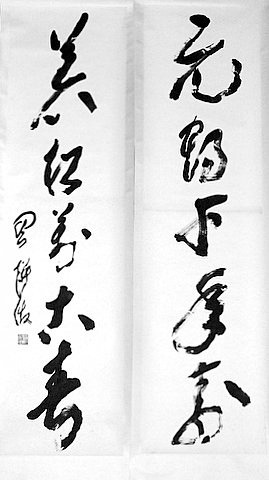
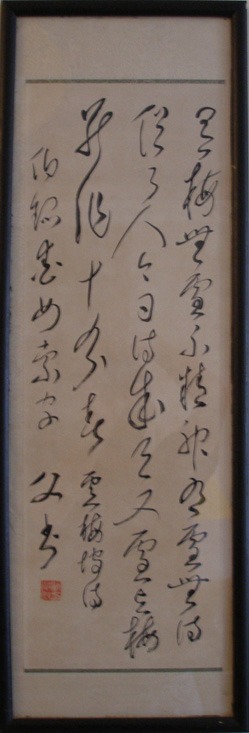
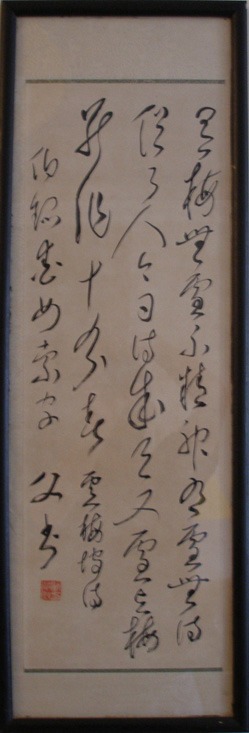
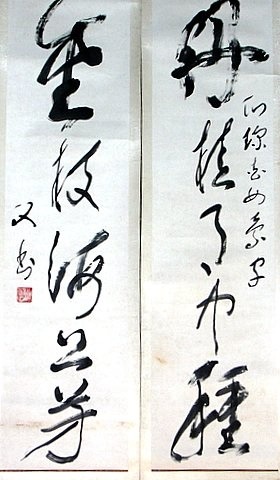
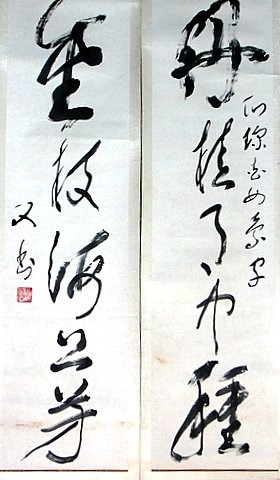
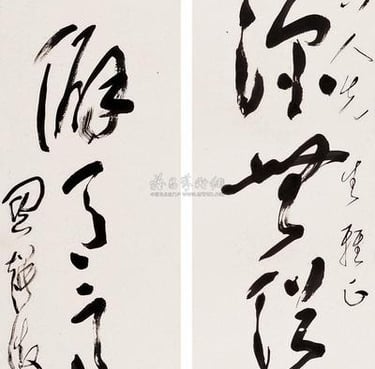
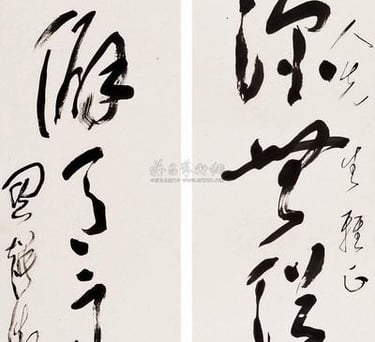
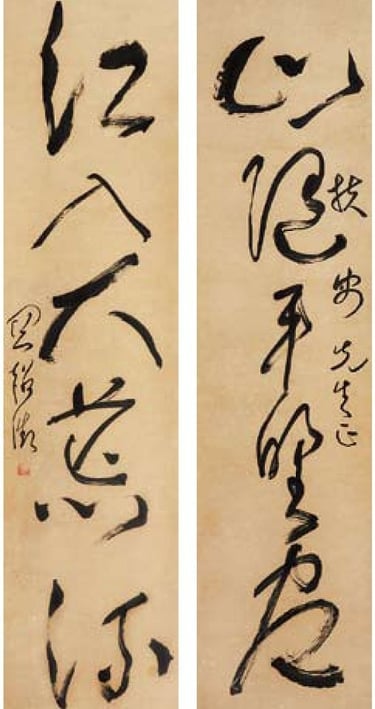
His calligraphy was accomplished, with a particular mastery of the cursive script. He made careful study of the Tang dynasty monk Huaisu's celebrated cursive works — including the Holy Mother Inscription, the Essay on Eating Fish, and the Preface to the Thousand Character Classic — as well as the Thousand Character Classic by the modern master of cursive script, Yu Youren. His own cursive work was exhibited at the Hong Kong City Hall and received warm praise.
A Soldier's Integrity Intact
In 1972, accompanied by his wife and daughter, he traveled to the United States and various countries in Europe, spending just over a month abroad before returning to Hong Kong.
When Chiang Kai-shek died in 1975, Guan Linzheng traveled to Taiwan at the invitation of Chiang Ching-kuo to attend the funeral. Afterward, Chiang Ching-kuo urged him to remain in Taiwan and take up a senior post, offering generous terms. Guan Linzheng declined politely and returned to his quiet life in Hong Kong.
Though living abroad, Guan Linzheng never ceased to think of his homeland and his birthplace. Reading the Hong Kong papers — the Ta Kung Pao and the Wen Wei Po — and following reports of the mainland's growing economic vitality, he was always glad.
In May 1979, his younger sister traveled from the mainland to visit him in Hong Kong. She told him of the changes since Liberation — the rapid pace of economic development, the advances in education and culture. He listened with great enthusiasm, frequently interjecting: "Yes! That's exactly how it should be done!" His wife later told her sister-in-law: "In all these decades, I have never seen your elder brother this happy." He expressed his appreciation for the policies introduced by the Chinese Communist Party following the Third Plenary Session of the Eleventh Central Committee.
Toward the end of 1979, he learned that his sister back home had been elected a member of the Provincial People's Political Consultative Conference. In a letter to friends on the mainland he wrote: "My sister Wuzhi has been honored with this appointment beyond what she might have expected — I hope you will offer her much guidance, so that she may prove worthy of the trust placed in her by the government and the people. That is my deepest wish."
He thought often of his Whampoa classmates and old comrades still on the mainland. He hoped that the Nationalist and Communist parties might achieve a third period of cooperation, bring the separation of Taiwan from the mainland to an early end, and realize the great cause of national reunification. He said to his sister: "I am a descendant of Yan and Huang. I long for the day when our country is united again."
On the evening of July 30, 1980, Guan Linzheng collapsed at his home in Hong Kong, struck down suddenly by a heart attack. He was rushed to Queen Elizabeth Hospital. As the doctors and nurses worked to save him, they noticed with surprise the many scars across his chest. His wife explained quietly: "Every one of those scars is a wound from the war against Japan."
He passed away on August 1, 1980. Central People's Broadcasting Station, the People's Daily, and major newspapers across the country all carried news of his death and accounts of his life. Marshal Xu Xiangqian sent a telegram of condolence to his family in Hong Kong: "The news of his passing has reached us with great sorrow. We were fellow students at Whampoa, and the memory of him will not leave us. We offer our deepest condolences — please take care of yourselves in your grief."
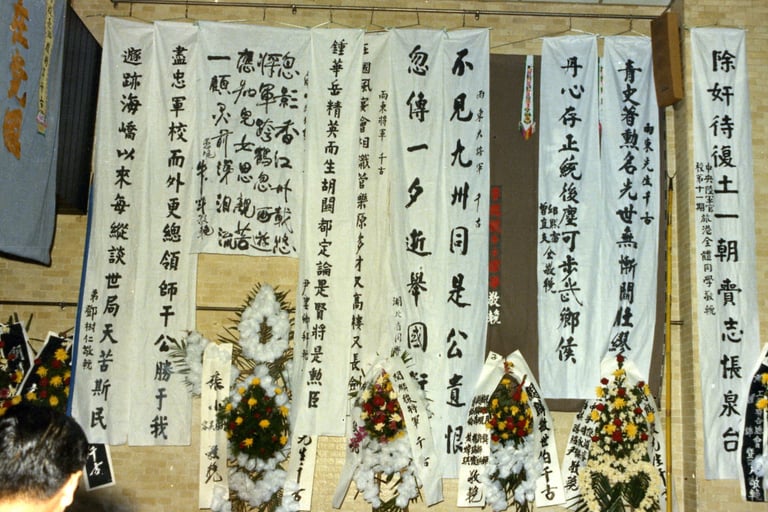
On the day of the funeral, several hundred Hong Kong-based alumni of Whampoa Military Academy from various classes, together with family and friends, served as pallbearers. Wreaths were sent by the Xinhua News Agency's Hong Kong branch, the National Committee of the Chinese People's Political Consultative Conference, and Marshal Xu Xiangqian.
Film Records and Photos of General Kuan Lin-cheng in Hong Kong


A Moment of Art: General Guan at the Brush with His Wife, Hsu Hsiao-jen
1971: A Reunion with Generals Liu Yuzhang, Zhang Yaoming, and Fellow Veterans of the 52nd Army in Taipei

"The Wedding of General Guan’s Eldest Son, Bonan, and General Liu Yuzhang’s Daughter, Xiaoling
(General Liu was the former Commander of the 52nd Army, then-Four Star General, and Commander-in-Chief of the Taiwan Garrison Command.)

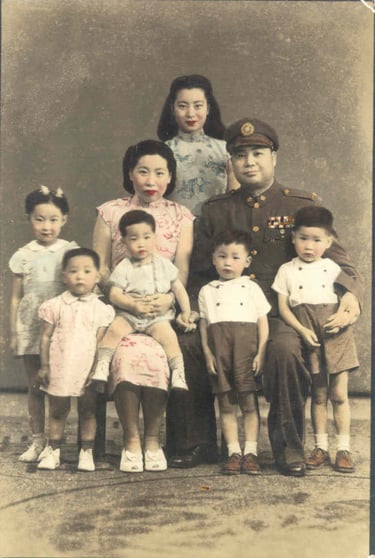
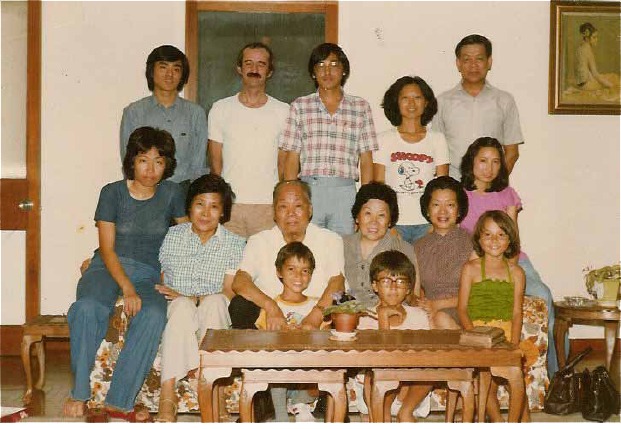
The Later Life of General Guan Linzheng, Narrated by His Son, Bonan
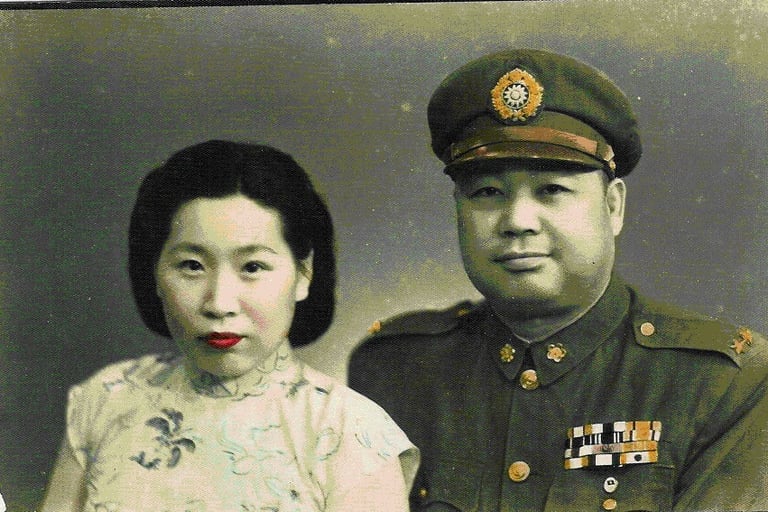
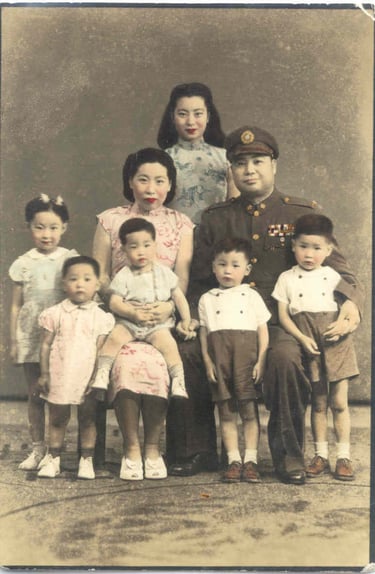
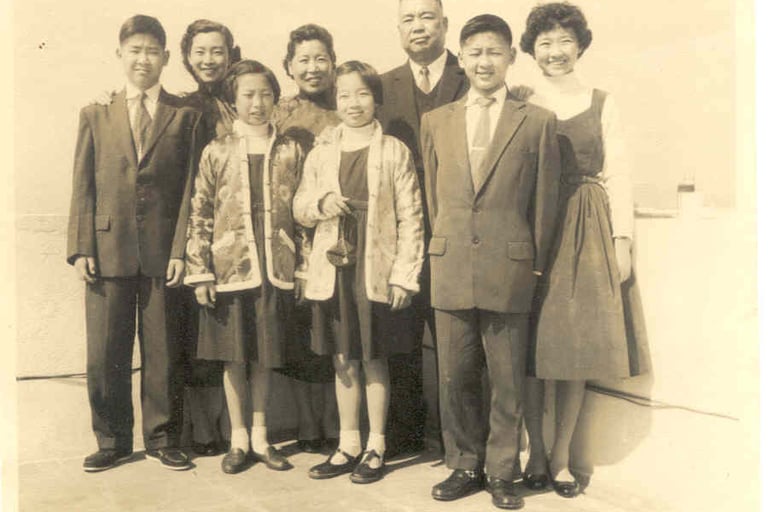
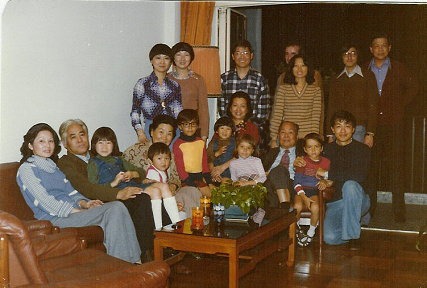
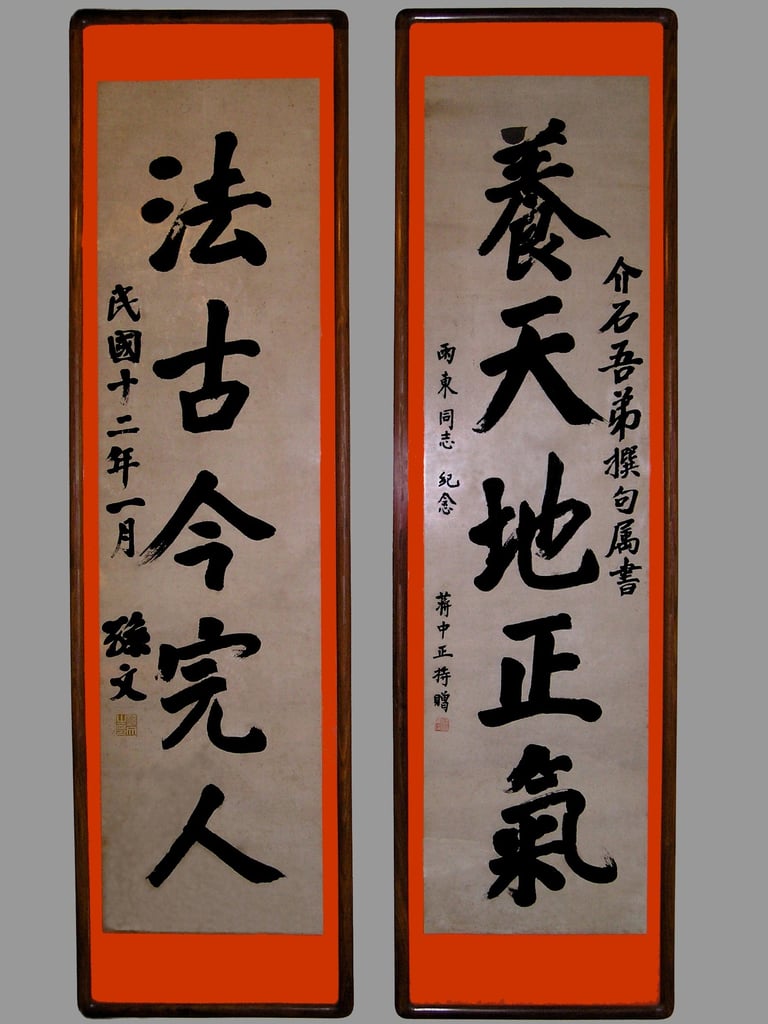
The Spirit of the Brush: General Guan’s Masterful Calligraphy
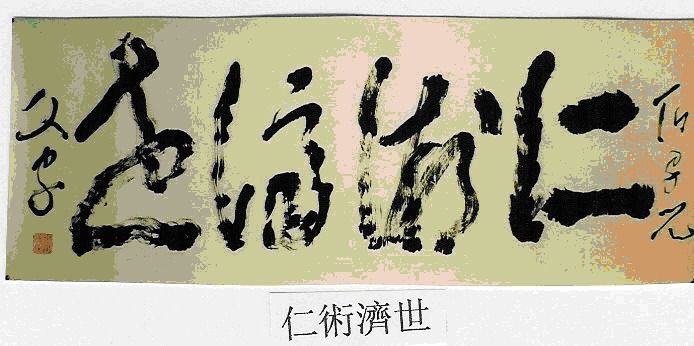
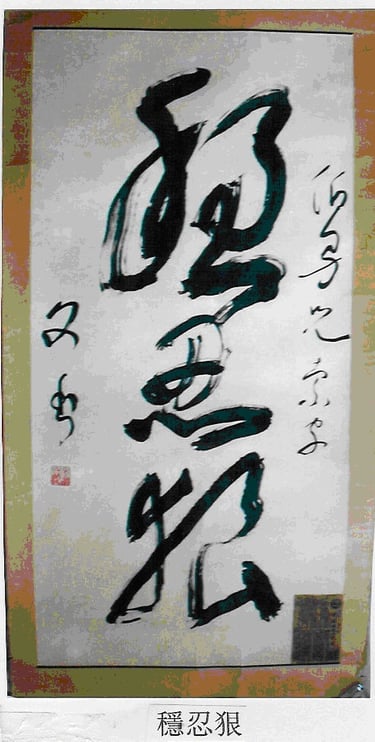
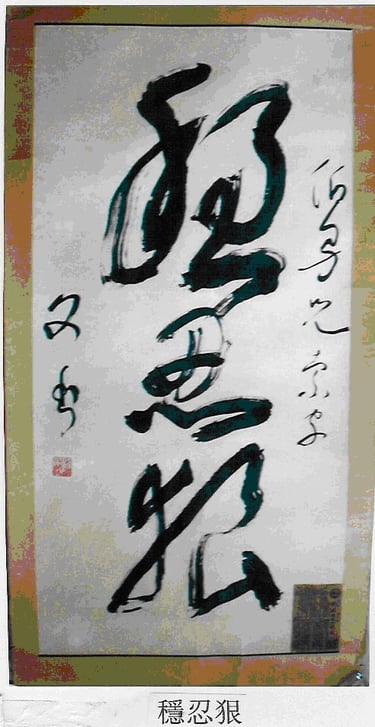
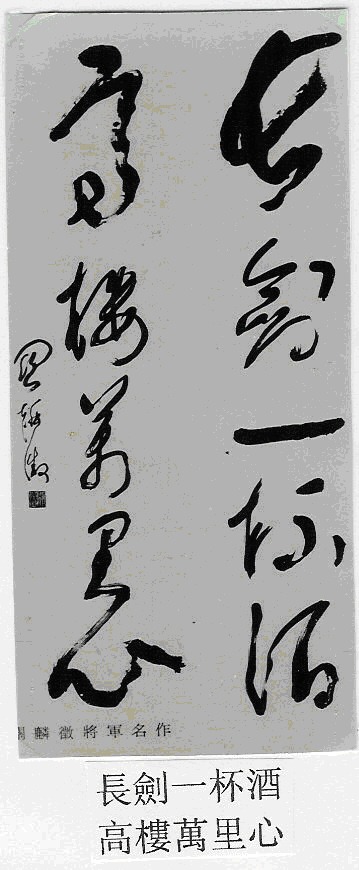
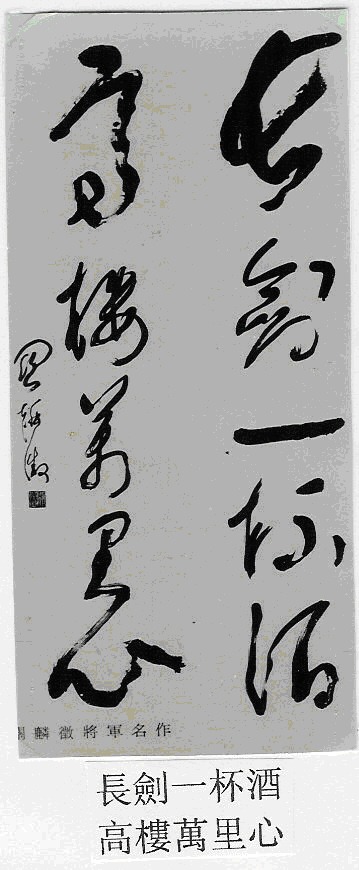
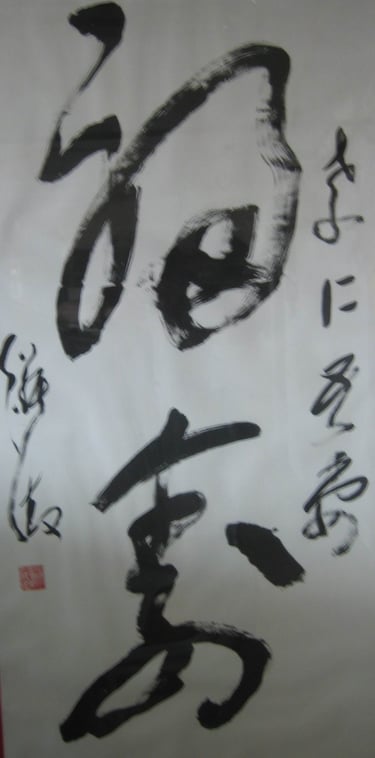
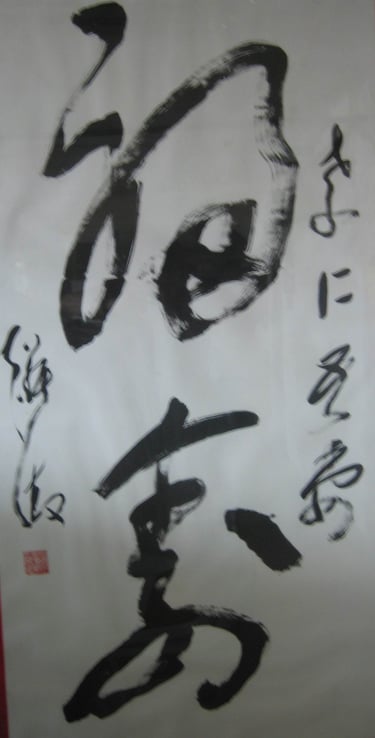
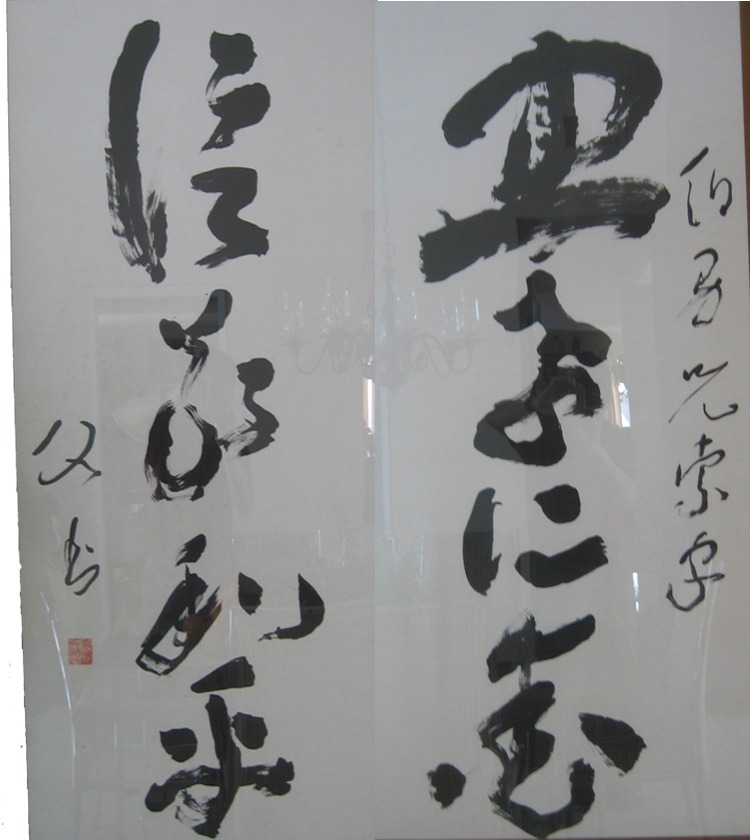
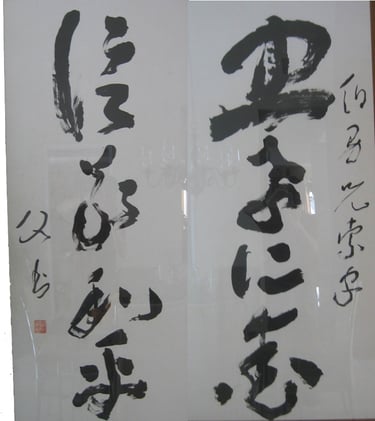
福寿
忠孝仁爱
信义和平
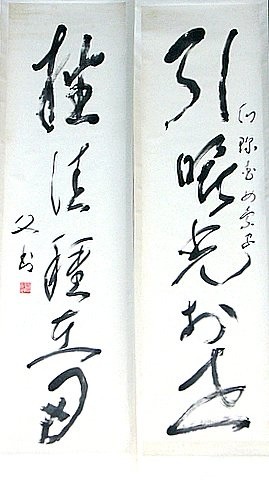
引曙光于世
播佳种在田
元鹤千年寿
苍松万古春
In the early hours of July 30, 1980, General Guan Linzheng collapsed into unconsciousness following a sudden heart attack and was rushed to Queen Elizabeth Hospital in Hong Kong.
During the course of treatment, the doctors and nurses noticed the many scars covering the old man's chest and were puzzled by what they saw. When they asked his family, they learned for the first time that this quiet elderly patient was none other than one of China's most celebrated commanders of the war against Japan — and that those scars had been left by grenade fragments suffered during the fierce battle against Japanese forces at Gubeikou. Those who heard the story were struck first with deep reverence, and then with profound astonishment.
At 7 o'clock in the evening of August 1st, General Guan Linzheng — a commander of his generation without equal — passed away at Queen Elizabeth Hospital in Hong Kong, having not responded to treatment. He was 75 years old. His family said: "In his final moments as he left this world, the General was peaceful and serene — as though he had simply fallen asleep."
The Passing of a Legend
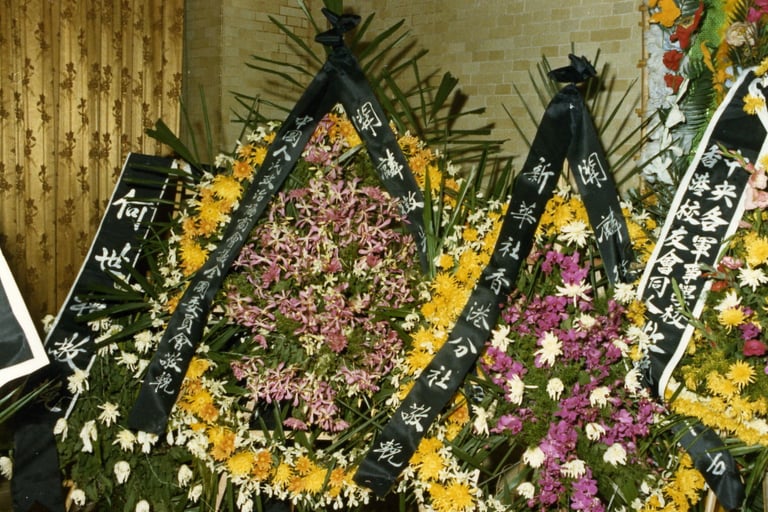
Eulogy for General Guan Linzheng
Delivered by Ke Dashu
11:00 a.m., August 11, 1980 —
World Funeral Home, Kowloon
Distinguished elders, dear friends:
Today we gather here with hearts full of grief to pay our respects to Mr. Guan Linzheng and to bid him our final farewell.
When we think of his campaigns across the length and breadth of China, of a lifetime given entirely to the service of his country — when we think of his warmth, his magnanimity, his wit, and the deep value he placed on friendship — when we recall what it felt like to be in his company, as though sitting in the gentle warmth of a spring breeze — we find that our admiration and our longing for him are beyond all words. That his passing has left everyone stricken with grief is only natural.
In recent years, Mr. Guan Linzheng had suffered from high blood pressure and heart disease. Despite continuous medical attention and medication, his health had remained poor.
In the early hours of July 30th, just after one o'clock in the morning, he woke suddenly from sleep and told his wife that he felt very unwell. He then lost consciousness. Accompanied by his wife and daughter, he was taken immediately to Queen Elizabeth Hospital, where emergency treatment was administered.
Over the following two days, the hospital assembled a team of physicians who consulted and tried every means available. Regrettably, nothing proved effective, and Mr. Guan Linzheng departed this world on the evening of August 1st. The grief of his entire family is beyond expression. At the moment of his passing, his wife and many of his children and younger relatives were at his side.
Throughout those two days in the hospital, though gravely ill, he showed no sign of pain or struggle. In his final moments as he left this world, he was peaceful and serene — as though he had simply fallen asleep. He was seventy-four years of age — a life, one may say, of great fullness. In the midst of their overwhelming sorrow, this is what his wife and family are able to offer as a measure of comfort to all of you.
Mr. Guan Linzheng was a native of Huxian County, Shaanxi Province. At the age of eighteen, he journeyed from his home in the distant northwest to Guangzhou. In 1925, he graduated in the first class of the Whampoa Military Academy.
In the decades that followed, he campaigned across the country and distinguished himself with extraordinary merit. He rose through the posts of Division Commander, Corps Commander, Army Group Commander, Commander-in-Chief of a Group Army, Commandant of the Army Officers' Academy, and Commander-in-Chief of the Army. In his love of country, his dedication to learning, and his approach to training and to battle, he possessed qualities that were entirely his own.
His gifts as a commander were especially admired, and he was regarded as a senior general of rare ability. Allow me now to offer a brief account of those gifts through three moments that defined his service:
The Battle of Gubeikou, 1933
When Japanese imperialism struck at north China in 1933, Mr. Guan Linzheng led his 25th Division to the Great Wall at Gubeikou in Hebei Province to defend the homeland in fierce and bloody combat against the Japanese forces. He fought without regard for his own safety, sustained wounds in multiple places, and struck the enemy with decisive force — the Japanese did not prevail.
This engagement was in truth the opening battle of our eight-year War of Resistance. It ignited the resolve of the nation's soldiers and civilians to stand united against the invader, and it demonstrated the fighting spirit and combat strength of our army. For his part in this battle, Mr. Guan Linzheng was awarded the Order of Blue Sky and White Sun — one of the Republic's highest military honors. He was twenty-six years old.
The Battle of Tai'erzhuang, 1938
By the spring of 1938, the War of Resistance had expanded into a full national conflict. In the months of March and April, our forces engaged the Japanese in a large-scale battle in the southern reaches of Shandong Province. We pursued the enemy and drove them back, securing a victory that became known as the Great Victory of Tai'erzhuang — a triumph that lifted the spirits of soldiers and civilians across the entire nation and steeled our collective resolve to fight through to the end.
Many units took part in this battle. Among them, the 52nd Army under Mr. Guan Linzheng's command served as the assault force, bearing the decisive responsibilities on the battlefield and playing a critical role in the overall victory. Mr. Guan Linzheng's command was outstanding, and the courage and fighting skill of his officers and men were widely praised.
The Battle of Northern Hunan, 1939
In September 1939, Mr. Guan Linzheng commanded six armies — more than two hundred thousand men — in a major engagement north of Changsha, Hunan, against approximately one hundred thousand enemy troops advancing southward. The enemy suffered enormous losses, and the battle became celebrated in the history of the War of Resistance as the Great Victory of Northern Hunan. Across the country, people took to the streets and public gatherings were held to celebrate. For his distinguished service, Mr. Guan Linzheng was formally appointed Commander-in-Chief of the 15th Army Group. He was thirty-three years old — the youngest army group commander in the entire country.
These three battles stand as luminous chapters in our nation's history of resisting foreign aggression. Driven by his love of country, Mr. Guan Linzheng led his officers and men through each of them — protecting the nation and its people, defeating a powerful enemy. He was, without question, a hero of the Chinese nation. His achievements will be recorded in the annals of history and endure for generations to come.
Finally, on behalf of Mrs. Guan Linzheng — Xu Xiaoren — their two sons, four daughters, grandchildren, and all other members of the family, I wish to express our deepest and most heartfelt gratitude to all the elders and friends gathered here today.
Condolence Telegrams
( I )
To the family of General Guan Yudong:
The arrival of this tragic news brings us the deepest sorrow. As Whampoa classmates, our memories of him are everlasting. We send this message to offer our profound condolences; we hope you may find peace and restrain your grief.
( II )
To Mrs. Xu Xiaoren:
We are shocked and deeply saddened to hear of the passing of our brother, Yudong. We had long hoped to reunite in Beijing to reminisce about old times and enjoy our later years together. That this long-held wish remains unfulfilled brings us immense pain. Our words cannot fully express the depth of our feelings. We sincerely hope you will take care of yourself and find strength in this time of mourning.
Du Yuming, Zheng Dongguo, Hou Jingru, Huang Wei, Li Qichong, Tan Yizhi
August 7, 1980 | Beijing
( III )
To Ms. Xu Xiaoren:
We were profoundly saddened to learn of the passing of Mr. Guan Yudong. We remember with great admiration his valor in the National Revolution and his heroic leadership of troops during the War of Resistance. Though we have been separated for over thirty years, our hearts remained united in the hope for a prosperous and unified motherland, and we have always cherished the deep bonds of our shared homeland. In these twilight years, we had hoped for a reunion to talk of old times, but time has not waited for us—a truly heartbreaking realization. Words cannot convey our full intent; we offer this to express our deepest mourning.
Yan Kuiyao, Kong Congzhou
August 7, 1980 | Beijing
( IV )
To Ms. Xu Xiaoren:
Brother Guan Yudong was our closest classmate. We were shocked to learn of his passing in a distant land, and our grief is difficult to set aside. We solemnly send this telegram to offer our condolences; please find peace and take great care of yourself.
Chen Tie, Song Siyi
August 7, 1980 | Guiyang
( V )
To Ms. Xu Xiaoren:
I was profoundly saddened to learn of the passing of Brother Linzheng. I send this telegram to offer my deepest condolences; I hope you may find peace and restrain your grief.
Liu Xicheng
Zhengzhou
( VI )
To Ms. Xu Xiaoren:
It is with deep sorrow that I learned of the passing of Mr. Guan Linzheng. I send this telegram specifically to offer my condolences; I hope you find strength during this difficult time.
Han Jun
Wuhan
( VII )
To Mrs. Xu Xiaoren:
I was deeply grieved to hear that my senior classmate Linzheng has passed away. Please accept my heartfelt condolences; I sincerely hope you will take great care of yourself and find peace.
Li Xianzhou
August 7, 1980 | CPPCC Shandong, Jinan
( VIII )
To the family of General Guan Yudong:
The arrival of this tragic news, informing us of Yudong’s passing, brings immense pain to one from his same homeland. I send this telegram to express my mourning; I hope you may find comfort and restrain your grief.
Wang Youyi
Xi'an
( IX )
To Mr. Xu Xiaoren:
I was profoundly saddened to learn that my senior classmate Linzheng has passed away. I solemnly send this telegram to offer my condolences and extend my deepest sympathies to his family.
Liao Yunze
August 7, 1980 | Nanjing
( X )
To the family of General Guan Yudong:
I was shocked to learn of General Guan Yudong’s passing in Hong Kong. Looking toward the south, I am filled with an overwhelming sense of loss. Our old Whampoa friendship, our shared military career, and the memory of his voice and presence remain vivid in my heart. I send this telegram to express my mourning; please find peace and restrain your grief.
Wang Wanling
August 8, 1980 | Shanghai
( XI )
To Mrs. Xu Xiaoren:
I was deeply saddened to hear of Brother Linzheng’s passing. Our bond as classmates is always in my thoughts. The arrival of this tragic news brings immense sorrow, and I send this telegram to offer my condolences. Please convey my deepest sympathies to the family.
First-term Classmates of Suzhou Whampoa Military Academy Wang Zhiyu
Suzhou
( XII )
To my Elder Sister-in-law and my Nieces and Nephews:
I was shocked and heartbroken to learn of my elder brother’s unfortunate passing; my grief is like a weight upon my heart. I send this telegram to express my profound mourning. I sincerely hope that you, my sister-in-law, and my nieces and nephews, will find peace and take great care of yourselves. Regarding the funeral arrangements, I leave them to the discretion of my nieces and nephews.
Your younger sister, Zhimei
Xi'an
( XIII )
To my Elder Sister-in-law and my Nieces and Nephews:
Now that my eldest brother has completed his hundred-year journey, it is a source of great sorrow that we, his sisters, cannot be there to wear the mourning weeds and escort his casket. We send this second telegram to mourn him with tears.
Your younger sister, Zhimei
Xi'an
( XIV )
To the Wife of the late Committee Member Guan:
I was shocked to hear of Mr. Linzheng’s passing and am filled with incomparable grief. The Mr.'s contributions to the Party and the State were grand, and his illustrious reputation will shine forever. I respectfully pray that you will restrain your grief and take care of your health.
Xue Yue
Taipei
( XV )
To the Wife of General Guan Linzheng:
We were profoundly shocked and saddened to receive the tragic news. We send this telegram to offer our swiftest condolences; we sincerely hope you will find peace and take great care of yourself.
Your fellow villagers: Zhao Puquan, Liu Zhong, Wang Yuedong, Wang Wenqing
New Tiantai
( XVI )
To Mrs. Guan:
The fall of Yudong brings me immense pain. He spent half his life in the saddle, and his contributions to the nation are great. Furthermore, I have heard that Brother Linzhao has also passed away; Heaven is truly unkind, and its cruelty knows no bounds. I solemnly send this telegram to offer my combined condolences; I hope you may find peace and accept these changes of fate.
Liang Kai
Yonghe, Taiwan
( XVII )
To Mrs. Xu Xiaoren:
We were shocked to hear the tragic news and are overcome with grief. We pray that you will find the strength to restrain your sorrow.
Zhang Wenbo, Huang Zhongmin
Hsinchu, Taiwan
( XVIII )
To Mrs. Guan:
I was profoundly saddened to learn of the passing of Representative Linzheng. I offer my deepest condolences and sincerely hope you will find peace and accept this change of fate.
Guo Cheng
Taipei
( XIX )
To Mrs. Guan:
We were shocked to hear the tragic news of Lord Yudong’s passing and share in this deep mourning. We send this telegram to offer our comfort and condolences; we respectfully ask that you take great care of yourself.
Zhang Qingguang, Dan Xiongcai, Liu Lichu, Yan Shengguang, Lyu Shiduan, Duan Liansan
( XX )
To Mrs. Guan:
I was deeply grieved to learn of the passing of Brother Yudong and offer my most profound condolences. I sincerely hope you will find peace in this time of sorrow.
Your younger brother, Sun Yuanliang
No. 3 Zhongzheng Road, Daliao, Kaohsiung
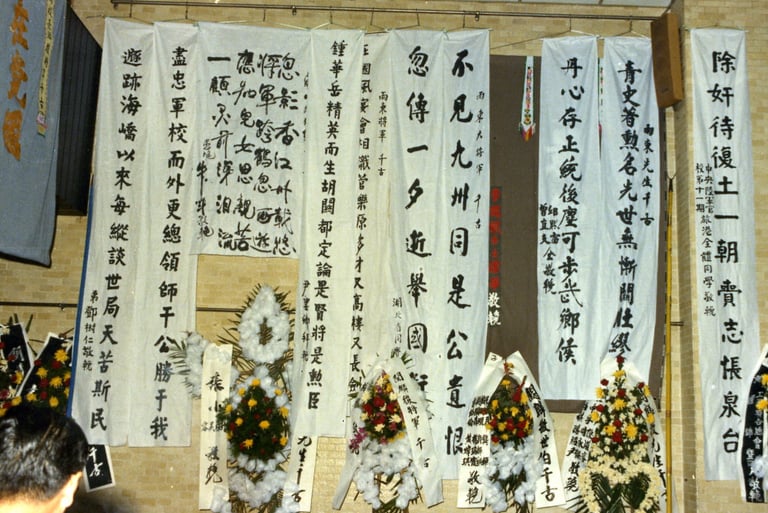
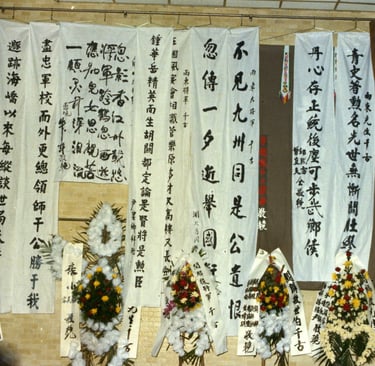
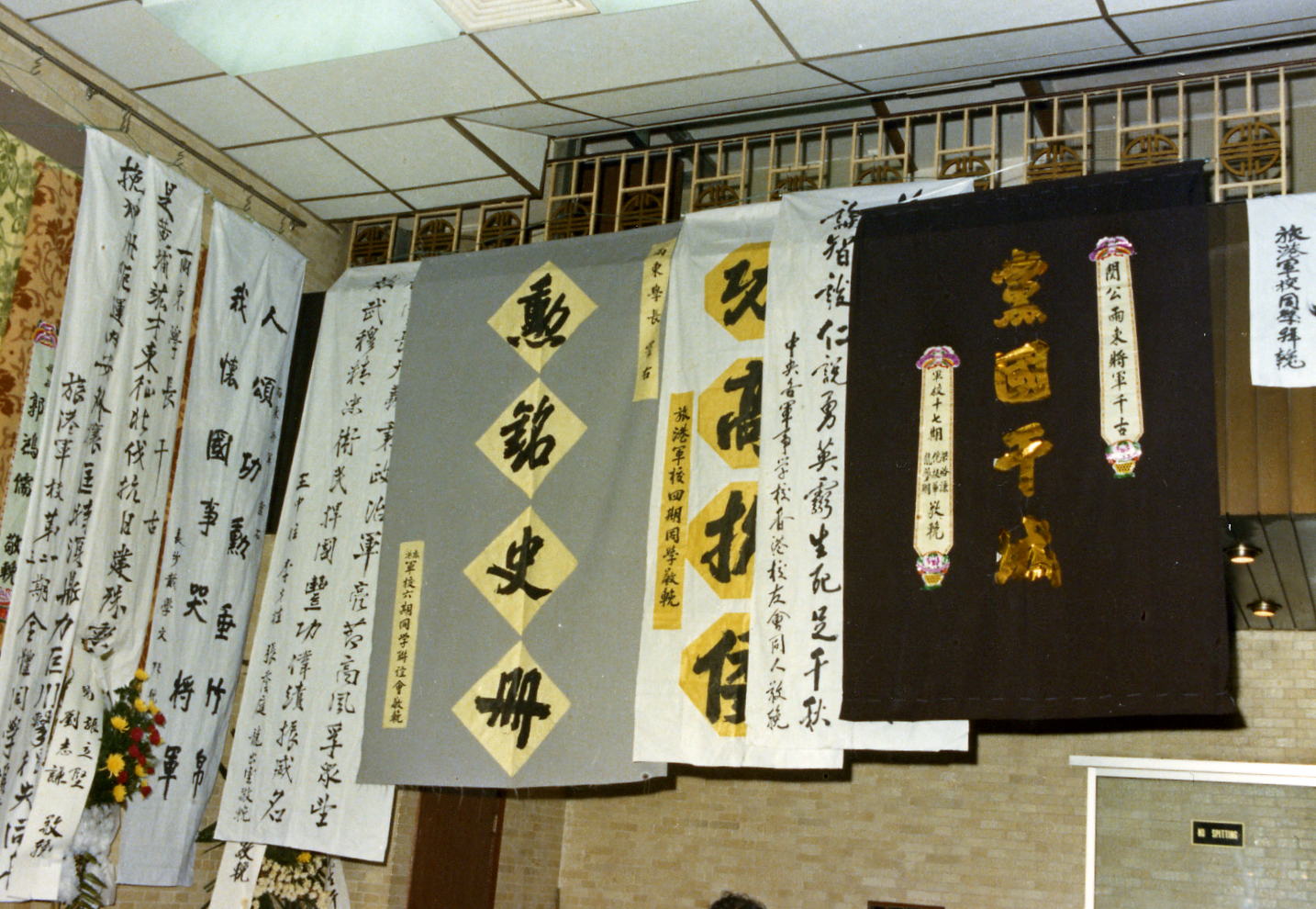
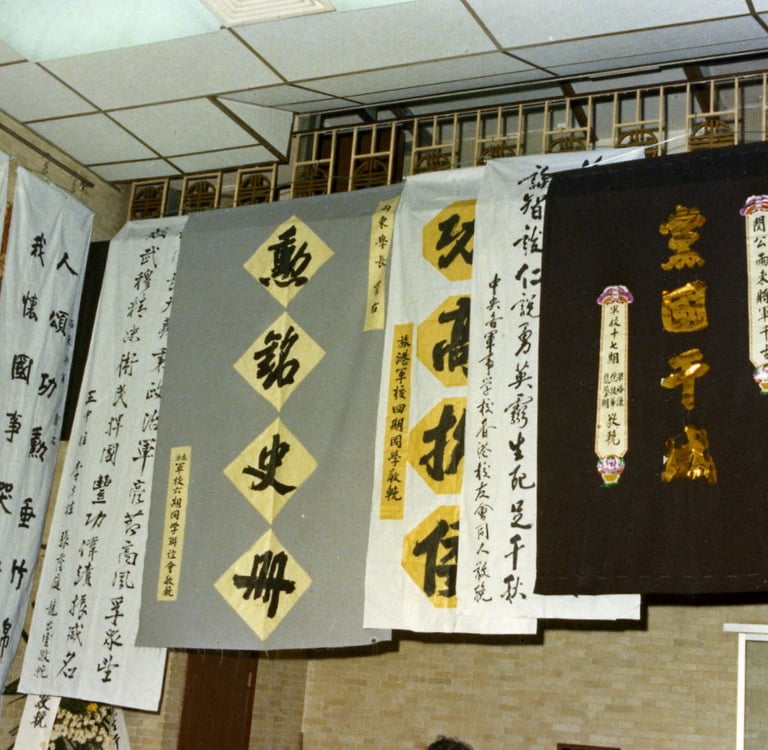
Memorial Elegies
For my dear relative, Mr. Yudong:
In a hundred battles, you achieved extraordinary merit; your bold spirit stirred the wind and clouds, broad and magnificent.
In a single morning, the tragic news shocks the heart; a life of profound strategy now rests, leaving its grand designs behind.
Respectfully offered by your relative and younger brother,
Liu Yuzhang
To my senior classmate, Yudong:
In both civil and military arts, you excelled; I remember those years of a hundred battles across our land, when we were as close as brothers.
In both merit and virtue, you stood tall; I mourn today amidst the storms from all directions, grieving as one of the few left behind.
Offered in memory by
Zhou Ji
To General Yudong; may your soul find rest:
We admire your lifelong commitment to righteousness, your political integrity, and your military discipline; your noble character stood high like a sage.
Your martial prowess protected the nation and your civil merit defended the people; your grand achievements and brilliant record will echo forever.
Respectfully offered by Wang Zhongzhu, Li Caigui, Zhang Yinting, and Long Shuyun
To my senior classmate, General Guan Linzheng:
A lifetime of illustrious fame, etched forever in the annals of history.
A generation of peerless merit, leaving a fragrance that will bloom for eternity.
Respectfully offered by
The Board of Directors and Supervisors of the Whampoa Military Academy Alumni Association in Hong Kong
To my husband, Yudong; may your soul find rest:
In your prime, you served as a commander; the world praised your civil and military governance, protecting the nation and people with great achievement.
For forty years, I served as your wife; I feel unworthy, for my virtue is thin and my skills few, failing in my path to support my husband and teach our children.
Mourned with tears by
your wife, Xiaoren,
together with your children and grandchildren
To our Commandant, Lord Yu:
We remember how you dedicated your life to the nation; from the Eastern Expedition to the Northern Expedition, you endured every hardship.
We grieve that we, your juniors, have no path to serve; in the pursuit of righteousness and sacrifice, we have lost our guiding mentor.
Respectfully offered by
the 21st Class of the Whampoa Military Academy residing in Hong Kong:
Wang Zhibin, Yu Zhonggan, Li Wen, Zhang Hanxian, Li Qifeng, Gan Yongchao, Gan Hanzong, Deng Qi, Jin Zhenlin, Zheng Lijun, Yu Yu, Zhu [X], Xiao Wen [X]
To our Teacher, Yudong:
A towering example of a teacher with the heart of a sage, leaving half a lifetime of merit in the records of history.
A resplendent and perfect man with the courage of a hero; from all directions, your disciples mourn for our land.
Offered in shared mourning by
your students of the 20th Class of the Military Academy in Taiwan
To Commander-in-Chief Yudong:
Defender of the Great Wall, victor at Xuzhou and Changsha; your fame in annihilating enemies is as great as the legendary Qi Jiguang.
Upholding loyalty and integrity, keeping every word of faith; your majesty in command is no less than the great Guan Yu himself.
Respectfully offered by your former subordinate,
Zhu Zhensheng
To Commander-in-Chief Lord Yu:
We look up to you for the bloody battle at the Great Wall, where you raised your arm to lead the charge and crush the invaders.
We are shocked by the tragic news of the star falling in Hong Kong; asking heaven in silence, we come to mourn at your door.
Respectfully offered by
Zhang Qixiang,
formerly of the Beijiaochang Residence
To my senior classmate, Linzheng:
You achieved extraordinary merit for the Nation; your Whampoa classmates cherish the memory of your past deeds.
While we looked to you for our restoration, at the peak of Mount Luofeng, we hear the news that the general’s star has fallen.
Respectfully offered by
the 7th Class of the Whampoa Military Academy in Hong Kong
To my senior classmate, General Guan Linzheng:
A generation of merit and renown as bright as the sun and moon.
A living Buddha to ten thousand homes, strengthening the spirit of our mountains and rivers.
Respectfully offered by
the members of the Whampoa Military Academy Alumni Association in Hong Kong
To Division Commander Lord Yu:
I remember the days when I followed you into battle, serving under your command of iron and gold.
Now the tragic news arrives amidst bitter wind and rain, as I mourn for you.
Respectfully offered by your former subordinate, Huang Zhongyi
To our senior classmate, General Guan Linzheng:
Respectfully offered by
the Hubei Provincial Native Place Association
To my benevolent brother, Yudong:
Beyond your dedication to the Academy, you led the army with a mastery that surpassed my own.
Since taking refuge in these islands, we often spoke freely of world affairs, pitying the suffering of our people.
Respectfully offered by your younger brother, Deng Shuren
To my Elder Uncle, Yudong:
Master of military strategy and civil learning, your divine might shook the world; your merit was recorded early in the history of the war against Japan.
Loyalty and courage as bright as the sun and moon; your noble example is forever admired, worthy of a place in the Hall of Fame.
Respectfully offered by your junior,
Liu Chutang, and his son An
To my senior classmate, Yudong:
Grand merit in the resistance against Japan.
Respectfully offered by
the 4th Class of the Military Academy in Hong Kong
To my senior classmate, General Guan Linzheng:
Merit recorded forever in history.
Respectfully offered by
the alumni of the Military Academy in Hong Kong
To my brother, Yudong:
Supreme merit in a hundred battles.
Respectfully offered by
Huang Jie
To Mr. Yudong:
History records your merit and fame; you bring no shame to your ancestor, the great Guan Yu.
Your loyal heart preserved the legitimate line; you follow in the footsteps of the legendary Zhuge Liang.
Respectfully offered by
Qiu Molei and Zeng Zhifu
To General Yudong:
We met at gatherings of national spirit, finding in you the talents of great ancients—lofty in ambition and sharp as a sword.
Born of the essence of the great mountains, it is a settled truth that you are both a virtuous general and a meritorious minister.
Respectfully offered by
Yin Wangqing
To our Father:
Your grace is as boundless as the vast heavens.
From your sons,
Bonan and Bojie
From your daughters,
Bokun, Boqi, Bochen, and Bowei
To General Yudong; may your soul find rest:
The people praise your merit, written forever on silk and bamboo.
With heavy thoughts of national affairs, I mourn the General.
Respectfully offered by
Zai Xuewen of Changsha
To our Commandant, Lord Yu:
From our youth, we heard your resounding name; though heavily wounded, you still fought with blood and courage.
Alas, we have no path to follow you; why does heaven bring such grief as we mourn our Master?
Respectfully offered by
the 20th Class of the Military Academy in Hong Kong
To our Great General and Clan Elder, Linzheng:
A refined and graceful general's star has fallen across the universe.
The loyalty and righteousness of our clan mourn the Lord; your noble spirit fills heaven and earth.
Respectfully offered by the Guan Clan Association of Hong Kong
© Guanlin Zheng Memorial – Family Managed
Contact
This website is the official platform managed by the family.
For all inquiries, please contact:
generalguanlinzheng@gmail.com