Commanding the Military Academy
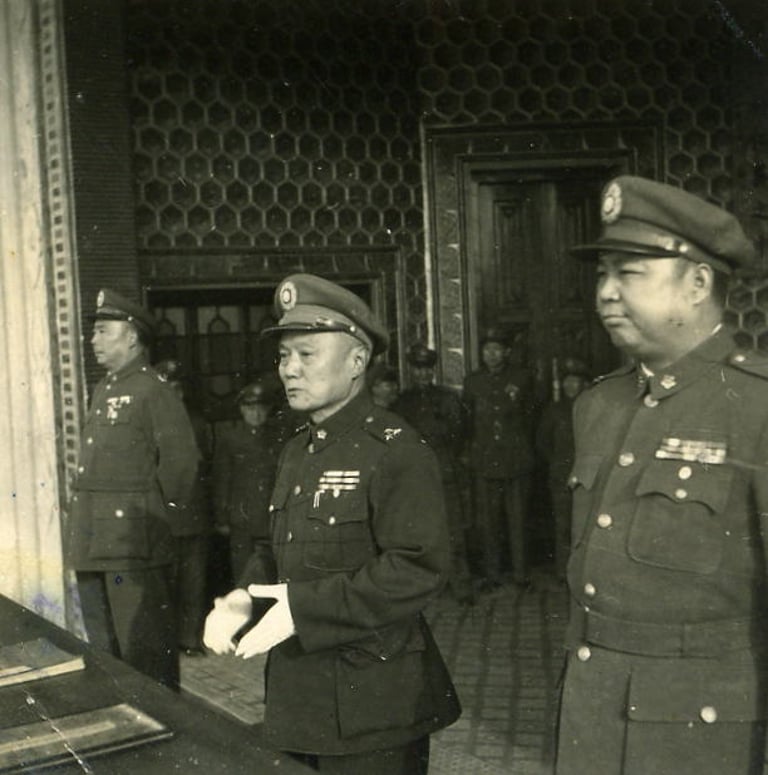
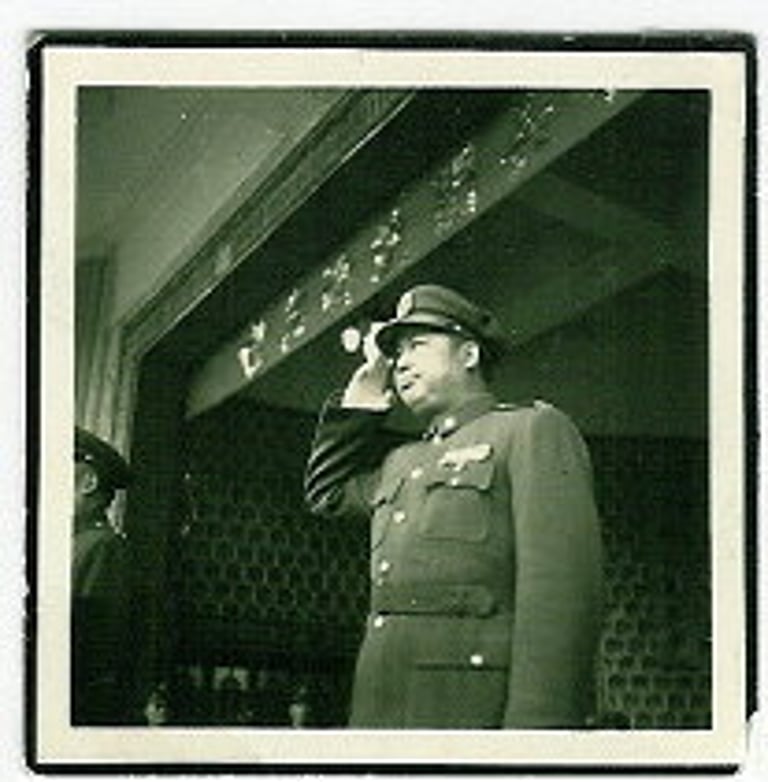
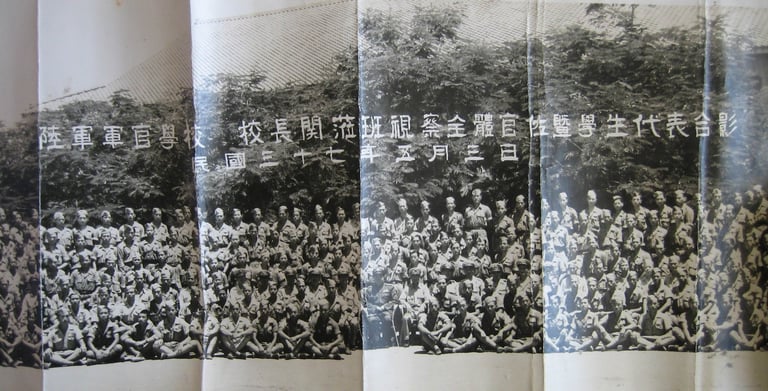
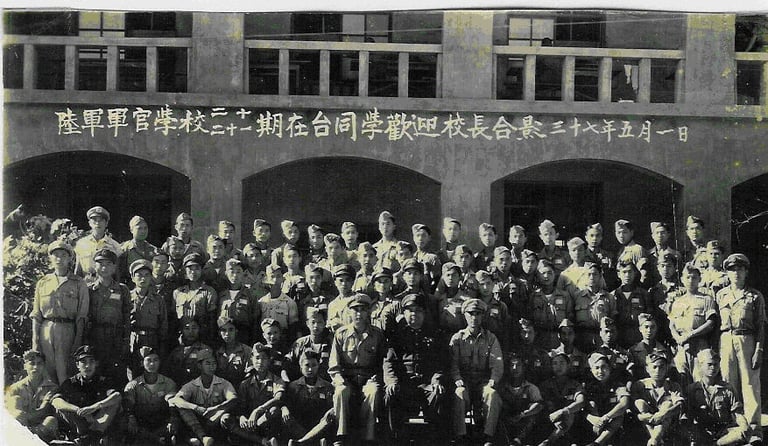
After several months of leave, General Guan Linzheng was appointed Superintendent of the Central Military Academy. In July 1946, he was elected as a delegate to the National Assembly. In October 1947, President Chiang Kai-shek resigned from his concurrent positions at various military academies; General Guan was subsequently promoted to Commandant of the Military Academy (with Lieutenant General Wu Yunzhou, formerly Director of the Wangqu 7th Branch, serving as Superintendent).
General Guan considered serving as the second President in the Academy's history to be the greatest honor of his life. In 1948, he was awarded the Order of the Cloud and Banner (Fourth Class).
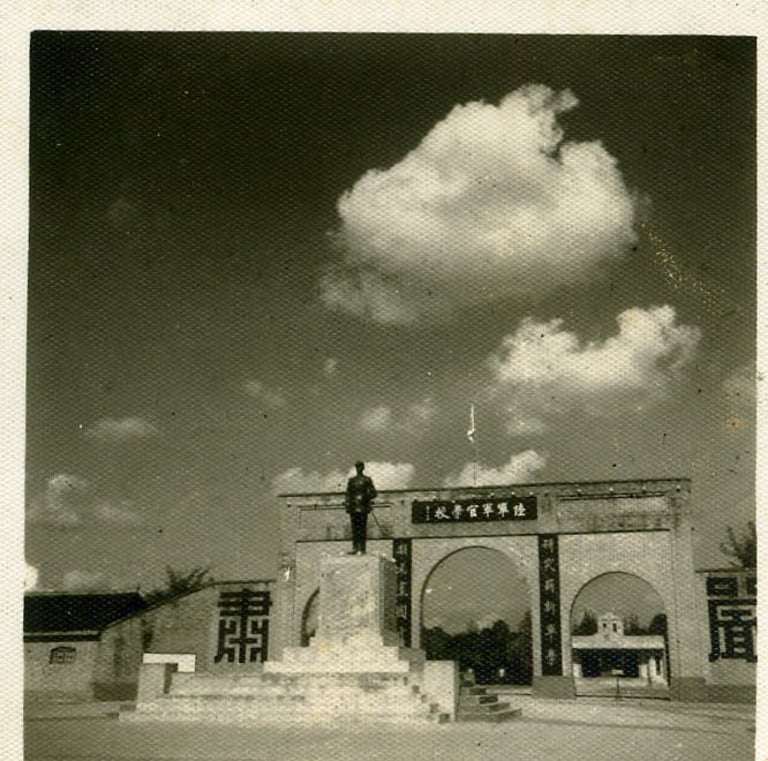
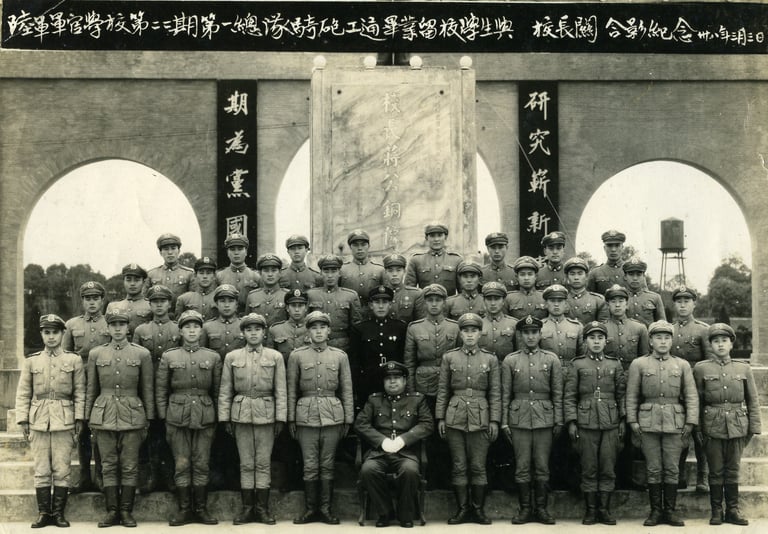
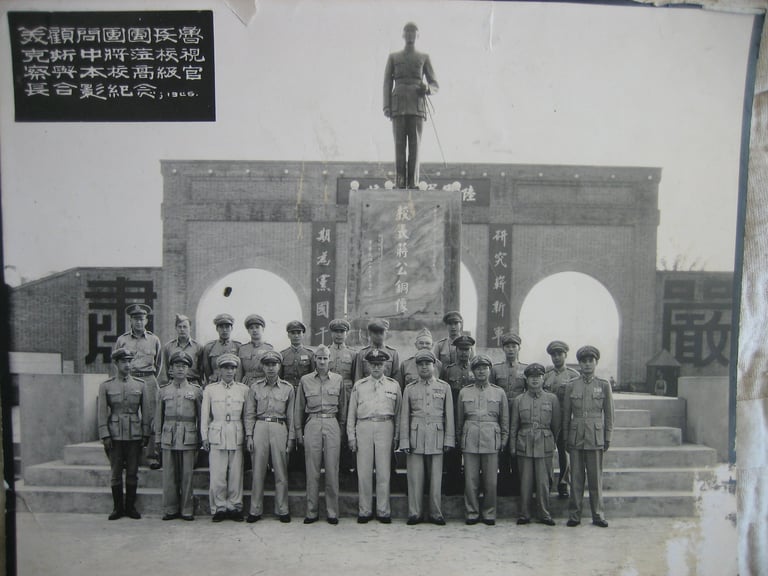
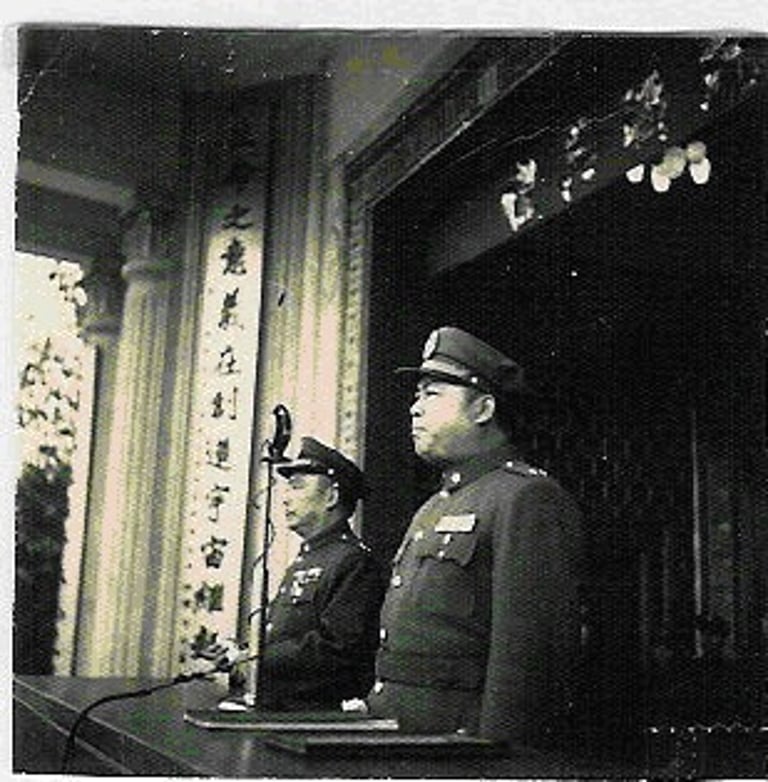
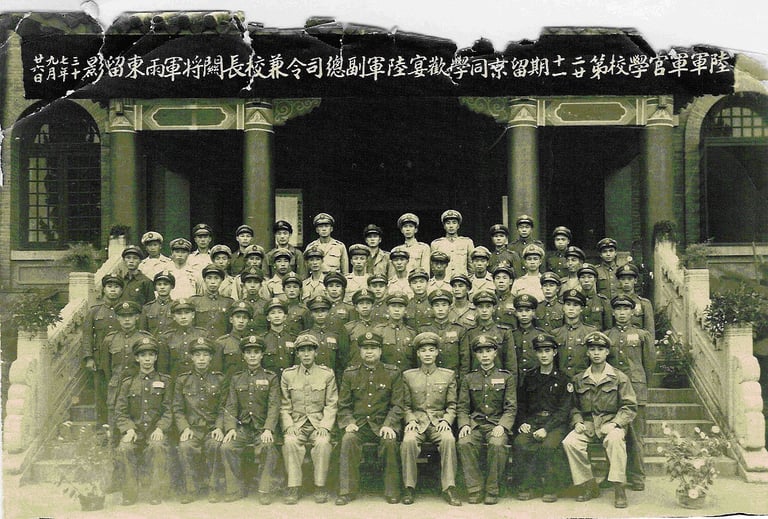
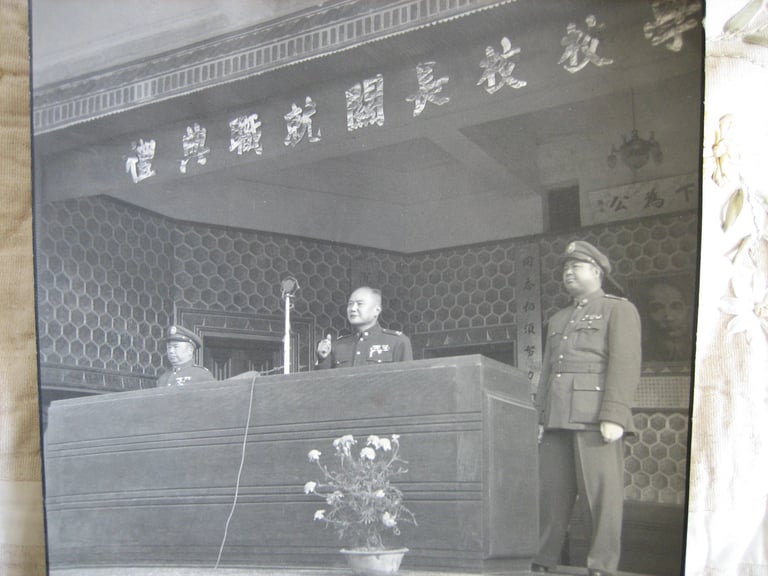
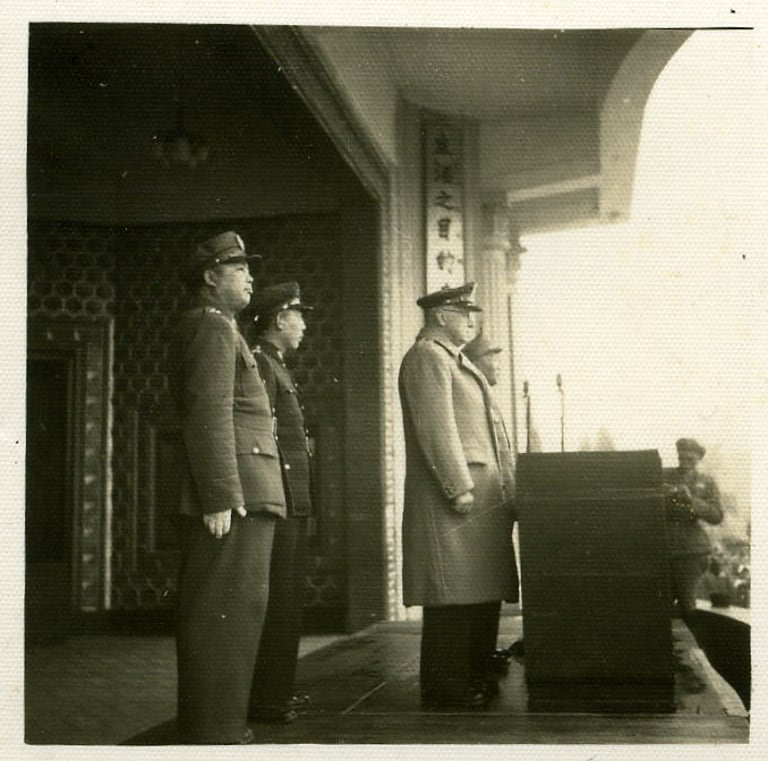
In July 1946, General Guan Linzheng was appointed Superintendent of the Republic of China Military Academy (formerly the Whampoa Military Academy). In October 1947, he assumed the office of Commandant of the Academy, making him the first alumnus in the history of Whampoa to serve as its President.

Whampoa Military Academy · Republic of China
On Character, Command,
and the Purpose of a Soldier
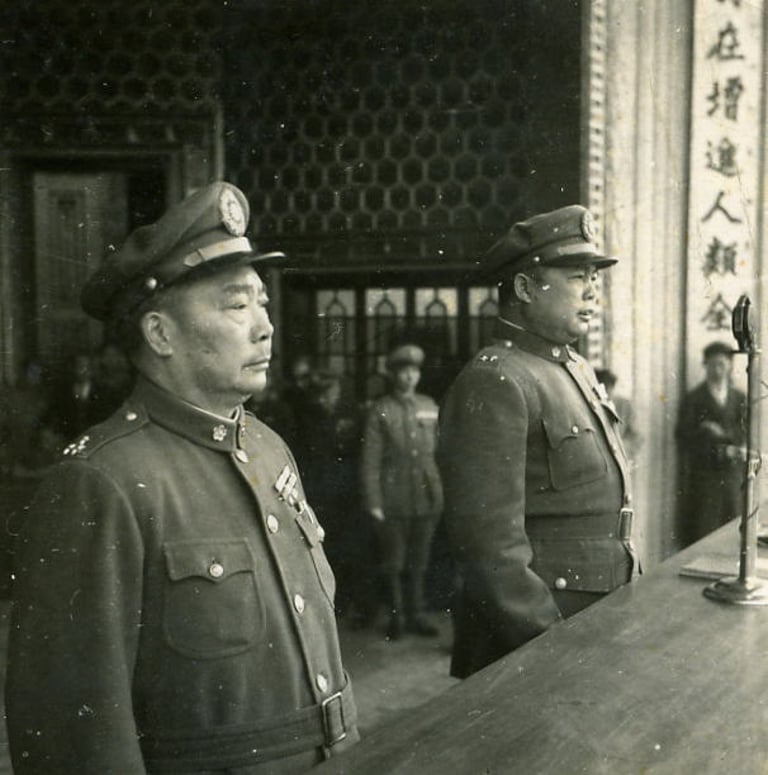
Address by General Guan Linzheng, Commandant
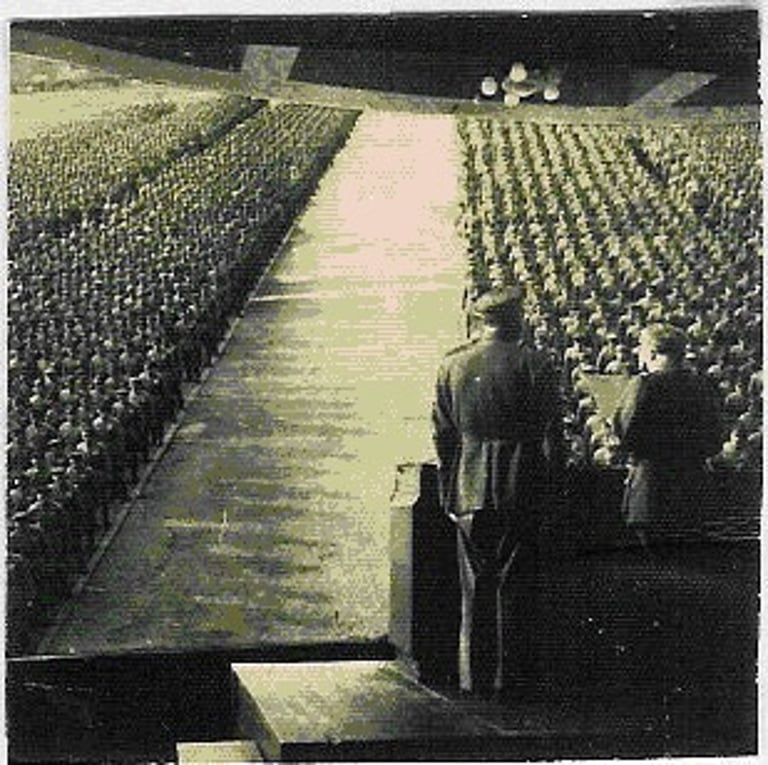
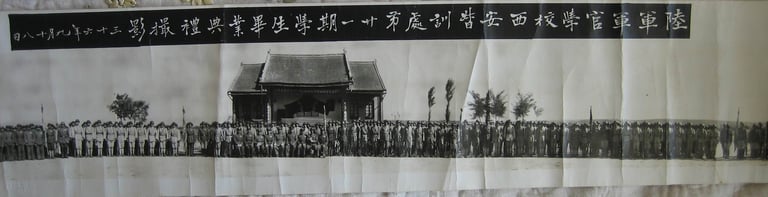
29 December, 1947 · 21st Class Graduation & 22nd Class Inauguration
Principal Points of the Address
The Academy's mission centres on moral character and the spirit of the Three Principles of the People — not technique alone.
Military science is the highest and most complex of all disciplines; learning must never cease after graduation.
Every officer must cultivate self-governance and an independent, upright character.
The Seven Principles of Command:
Be sound in your own person
Reward and punish with clarity and impartiality
Embrace hardship and diligence
Lead with courage and the spirit of sacrifice
Keep all financial dealings with soldiers scrupulously clear
Love your soldiers
Read your soldiers' hearts and inspire their will to fight
The 22nd Class must ask themselves: why did I come here? — the answer must be service to the nation, never personal advancement.
Recruits are soldiers first; the hardships of induction training forge genuine understanding of those they will one day lead.
All old habits of thought and conduct must be shed from this day forward — let yesterday die, and today begin anew.
Graduates of the Tactics Research Course must remember that scholarship has no terminus; teach, study, and press ever forward.
Opening Remarks
Today we gather for the graduation of the 21st Class — Infantry Battalions Three, Four, and Five, together with the specialist corps battalions and the Eighth Tactics Research Course — and simultaneously for the inauguration of the 22nd Class. After the words of the Chairman, the Minister of National Defense, the Chief of Staff, and the Commander of Ground Forces have been read in full, I wish to add a few thoughts of my own.
To the graduating students of the 21st Class, who from this day depart for service in the field, I ask that you carry these points with you always.
To the 21st Graduating Class
I. The Foundation of All Achievement
Know first what this Academy truly trains. Our purpose is not the mastery of technique alone. It is the cultivation of the spirit — above all, the knowledge of how to live as a human being, and the revolutionary spirit of the Three Principles of the People.
We transmit the Whampoa tradition: that unbroken thread of moral inheritance running from the sage-kings Yao, Shun, Yu, Tang, King Wen, King Wu, the Duke of Zhou, and Confucius, down through our Founding Father and our Generalissimo to this very day. This is the soul of the Chinese nation. It is our national spirit. It is the soul of the soldier.
These spiritual foundations, instilled during your years here, are the very ground on which any lasting achievement rests. I have said to you before: what a soldier needs most is noble character and an independent spirit. With these, your work will succeed; and even if you fall short, you will have succeeded in the truest sense. Without them, failure is simply failure — and whatever worldly success you stumble upon is, in truth, failure as well. Do not neglect this. Let everything you have learned here find expression in your every action.
II. Learning Has No Final Shore
You have trained here for nearly three years, and today you graduate. Yet understand this: military science is the crowning synthesis of all sciences — the most profound and complex field of knowledge known to man. What you have learned is but a hair from nine oxen, a single grain from the boundless sea. Never permit yourselves to become proud or complacent. From this day forward, learn everywhere — on the battlefield, within the ranks, in every waking moment.
"Learn until your last breath." The Book of Changes teaches: the noble man strengthens himself without ceasing.
— The I Ching, cited by General Guan
We must struggle against our circumstances, against our adversaries, against every force of darkness and decay. That struggle demands that each of us live by the principles of character and spirit we have received — and press forward without rest. Only then does knowledge grow; only then do wisdom and virtue deepen; only then can one stand in the world and accomplish enduring work.
Do not walk out those gates and cast aside everything you have learned. Do not imagine that, freed from the discipline of officers above you, you may neglect character and principle, corrupt the regulations, and bring dishonor upon the name of a soldier. If you do, your career holds no promise — and the nation itself is left without a future.
III. Self-Governance and Independent Character
Consider the United States Military Academy at West Point. Its great distinction is the noble character of its cadets. When examinations are set, the instructors leave the room entirely — there are no proctors — yet the cadets govern themselves with complete integrity: no hidden notes, no whispered answers, no dishonesty of any kind. Outside the classroom, without officers to march them or supervise them, discipline holds firm, and nothing occurs to stain a soldier's honor.
I ask you to examine yourselves honestly: can you say the same?
This Academy has advanced greatly over the past year. In spirit and in discipline, we have been commended twice by the Chongqing Command. But I must be plain with you: that commendation was earned under the close watch of senior officers. It was compliance, not self-governance. Now that you graduate and leave our direct supervision, the true test begins. Do you possess an independent and upright character? Have you the will to govern and respect yourselves? Can you stand alongside the cadets of West Point?
They achieve self-governance while still in training. You are officers about to command soldiers. If you cannot match a cadet still under instruction, what hope remains for your units — or for the nation?
The Chairman has called us to be world-class soldiers: men whose character, knowledge, and physical bearing can stand, measure for measure, beside the armies of the great powers. That is the only road to genuine national independence. Let us ask first whether our own Academy's graduates can stand beside West Point's students. Let that be the standard.
Others have said of us that the Chinese do not observe discipline or order, cannot govern themselves. It is a shameful thing to hear. This Academy is the cradle of revolution. Revolution begins with oneself. Every trace of dishonesty, extravagance, indiscipline, disorder — every bureaucratic habit and official airs — must be uprooted and swept away from within each of us. This must hold not only in your final days here and on the road to your posting, but throughout your service. Only then will your army, and your nation, have a future.
Our efforts against the insurgency have fallen short of their mark precisely because certain units have allowed discipline and spirit to decay — because certain officers lack the independent will to act, the upright character to lead, the capacity to give full expression to the soldier's spirit and to the revolutionary tradition of Whampoa.
Upon you graduating students, therefore, I place my deepest hopes. Do not forget what has been given to you here: the knowledge of how to live as a human being, the Whampoa tradition, the revolutionary spirit of the Three Principles, the soul of our nation and of our soldiery. These teachings are beyond price. Carry them. Live by them.
The Seven Principles of Command
When you join your units, the question of how to lead soldiers will be paramount. The subject is inexhaustible — I can offer only the most essential points. Heed them, practice them, and they will serve you all your life.
Principle One: Be Sound in Your Own Person
The ancient saying holds: when the commander himself is upright, orders need not be given — they are followed; when he is not, orders may be issued, yet they will be ignored. As the wind bends the grass, so the officer shapes those beneath him.
At this Academy, the first requirement of good leadership is that I myself keep the accounts open, appointments just, and every decision grounded in sincerity and impartiality — everything for the school, everything for the students, everything for education. If I hide the finances, favor my own clique, and act without transparency, no words of mine will carry weight. So it is in the field. Lead by example. In peace, command through your moral authority and your knowledge. In war, lead from the front — let your fighting spirit and your superior judgement carry the day. Every action you take must earn the genuine respect of those beneath you. Only then does command take true effect.
Principle Two: Reward and Punish with Clarity and Impartiality
The sole instrument of command for every officer is the power to reward and to punish — the power of life and death, of grant and withholding. To inspire the will to fight, reward and punishment are everything. To build a disciplined force in peacetime, reward and punishment are everything. And their one indispensable condition is clarity and fairness. Investigate thoroughly; let reward find the truly meritorious, and punishment find the truly guilty. Never act from personal feeling. Never grant or withhold as a personal favor.
The great Ming general Qi Jiguang said it plainly: if a man deserves reward, reward him — even if I have a blood feud with him; if a man breaks military law, punish him — even if he is my own son. There can be no settling of private scores through the power of reward and punishment. Only when it is clear and just can it straighten discipline and forge the will to fight.
Principle Three: Embrace Hardship and Share the Soldier's Life
Live alongside your men. At present, soldiers regard graduates of this Academy as carrying something of the habits of privilege — as men who cannot endure hardship. They think: they cannot march a hundred li in a day as we can; they cannot bear hunger, cold, and heat as we do. When you reach your unit, answer that opinion with your actions. Show that Academy graduates can endure as much as any soldier — and more. Diligence and willingness to suffer will earn their respect naturally, and command will come easily.
Principle Four: Lead with Courage and the Spirit of Sacrifice
Among seasoned officers and soldiers alike, there is a common view: that Academy graduates may have superior knowledge, but in raw courage and willingness to sacrifice, they fall short of men who rose through the ranks. In other words, they believe we fear death, that we will not give our lives. If your men carry that belief, you cannot lead them. In battle, therefore, you must be first to advance — pressing forward with courage, living and demonstrating the spirit of sacrifice.
Principle Five: Keep All Financial Dealings Scrupulously Clear
This demands your closest attention — not only with soldiers, but with every subordinate. In all matters of money, your hands must be clean. An officer in command must never take the slightest advantage over those beneath him.
Remember this: sooner starve than withhold a soldier's pay; sooner go hungry than borrow from those under your command. The old saying goes, death from poverty is a small thing; loss of honor is a great one. The honor spoken of here is the soldier's integrity. To gain one yuan at a subordinate's expense is to suffer a loss of spirit and character that no fortune could ever repair.
Let your men take advantage of you — that is how soldiers are led well. This is the lesson of twenty years of command. I say it not only to the graduating class, but to every officer present: if administrative costs leave you short, the Academy can draw on reserve funds to cover the deficit — but not one fen may ever be taken from a student or a soldier. A soldier's pay is thin; to withhold even a fraction is to earn his hatred. Let that hatred become known, and the damage to your name is beyond recovery. Guard against it now, before regret becomes your only counsel.
Principle Six: Love Your Soldiers
You cannot lead men you do not love. Sun Tzu wrote: treat your soldiers as infants, and they will follow you into the deepest valleys; treat them as beloved sons, and they will die by your side. But this love is not the indulgent fondness of a weak mother. It is the love of a parent for a child — embracing them while also correcting them, encouraging them, guiding them toward the light and toward success.
When you reach your unit, do not recoil at soldiers in worn and tattered clothing. If you harbor such contempt, you will never draw close to them — and in battle, you will fail.
Remember: the heart of the Three Principles of the People is the Principle of the People's Livelihood, whose two great aims are the regulation of capital and the equalization of land rights. Until those policies are fully realized, the living standard of soldier and civilian alike cannot be raised.
We are followers of the Three Principles. We cannot covet the comforts of the privileged and the wealthy. To do so disgraces oneself and dishonors every generation that came before. Look upon your soldiers with sympathy. When their clothing is ragged, wash it and mend it; keep them clean. Feel in your bones the poverty of the nation and the people. Cherish your soldiers as brothers. Only then will they trust you, love you, obey without question, advance without hesitation — and victory will follow.
Principle Seven: Read Your Soldiers' Hearts and Inspire Their Will
The supreme skill of every great commander — and of every great statesman — is the ability to read and move the hearts of the many.
Military wisdom teaches: to command an army, first command its heart. An officer must hold his soldiers' hearts in his hands at all times, lifting their morale without pause. How is this done? By giving constant thought to the improvement of their food, shelter, and movement.
Before the soldiers are settled and comfortable, an officer must not seek his own ease. Illness must be treated promptly. In training, build from the start a culture in which every man feels that training matters, and that the methods you use are sound — so that all willingly receive them.
And in battle, ensure that your plan and your intent carry the full confidence of the entire force, so that every heart moves as one. Sun Tzu said: when those above and those below share the same desire, they are victorious. First make ten thousand hearts one, and then will ten thousand hands strike as one — and the enemy can be overcome and the victory decided.
To the 22nd Incoming Class
IV. Why Have You Come?
Now I address the new students of the 22nd Class, whose induction training begins today. Let me make clear from the very beginning the purpose of your being here.
Every new student must ask himself this question: why have I entered a military academy? If you believe that graduation will bring you promotion, wealth, glory, and personal advancement — that is not what this Academy requires, and you cannot be a carrier of the Whampoa revolutionary tradition. You are, in that case, not fit to be an officer of the nation. If that is your purpose, withdraw of your own accord.
The soldiers we train here can harbor no thought of personal gain. We do not serve ourselves. We come to learn how to live as human beings: to receive the revolutionary training of the Three Principles of the People, to carry forward the Whampoa tradition, to dedicate ourselves — body, family, and life — entirely to the nation. This is why we train. This must be the ambition you brought with you. Understand it to the marrow. Hold it in your heart without wavering.
Know that the sorry state of our nation and society today springs directly from the decay of our people's moral foundations. China's traditional virtues have been undermined by those who half-understand modern thought and call themselves progressive — who, imagining themselves advanced, have abandoned the principles that govern human life and left conduct without a compass.
Some who have studied in Europe and America brought home only fragments of scientific technique, absorbed chiefly in private interest, never learning the deeper human wisdom of those nations — let alone understanding that a people's spiritual tradition is forged over centuries of history and is irreducibly its own. One cannot borrow another nation's soul. Science and technical skill may be transplanted; a people's character cannot. When the old virtues are dismantled before new ones have been built, society inevitably begins to come apart.
In recent years we have witnessed repeated student unrest — days when teachers and officers are treated with contempt, when even the murder of classmates and instructors has occurred, when the flimsiest pretext is seized upon to walk out of class and parade through the streets in search of idle time. The great and essential books of Chinese wisdom — teaching how to live and act with purpose — are wholly disregarded. This is profoundly dangerous.
I have spoken before of the lesson we too readily misread in America's victory in the last war. We see only the power of science, and overlook the spirit of service, the will to fight, and the social morality that truly drove it. We claim five thousand years of civilization and a great culture — yet we fail to put it into practice.
In American streets, traffic flows without police officers directing it; signals alone maintain perfect order. This is partly the fruit of advanced engineering, but its true root is a people who possess an independent and upright character — who govern themselves, respect themselves, observe order, and honor their social duties. That is where genuine discipline is born.
To restore China, we must first restore the spirit of the Chinese nation — recover the inherent virtues of our civilization. The Founding Father gave us the Eight Virtues: loyalty, filial piety, benevolence, love, integrity, righteousness, harmony, and peace.
The Generalissimo has charged us to uphold the Four Cardinal Principles: propriety, righteousness, integrity, and honor. These are the medicine our nation urgently needs. In the warlord era, officers and men disregarded discipline and order entirely — some even boasted of riding trams and entering theatres without paying as though it were a mark of distinction. It was shameless. We must above all attend to the principles of human life, recover our inherited virtues, and rebuild from within. This is the sole foundation of everything we do in this school.
V. You Are Soldiers First
Understand clearly: an induction recruit is a soldier. Induction training is a soldier's training. You will endure a soldier's hardships and live a soldier's life — so that when the day comes that you hold command, you will know from bone-deep experience what your men need, and compassion will arise in you naturally. When your heart is joined to theirs, when you share in their sufferings, a hundred men or a thousand will move as one. For this reason, even where better quarters and finer facilities exist, they will not be given to you. Your treatment will be the same as a private soldier's. This is the point: to build within you an iron spirit of endurance and diligence, and to lay the true foundation of military training.
VI. Let Yesterday Die
The decline of social morality is not the work of a day. Before you arrived here, some of you were in schools or offices; all of you have been touched, to one degree or another, by the corruptions of society. Some of you are aware of it; some are not. From today, the opening of this term, you must wash it all away — purge every last trace of harmful thought and conduct. All things past — let them die as yesterday died. All things to come — let them live as today begins to live.
Now that you are students of this Academy, you must renew yourselves, day after day, from the inside out. Only then can you become soldiers of the modern revolution. Observe discipline strictly. Obey orders. Strive with all you have. I believe the 22nd Class, trained to the highest standards — selected from fifteen hundred recruits, every one of you meeting the physical and academic requirements — will surpass every class before you. Your achievement will be exceptional.
To the Tactics Research 8th Course Graduates
VII. Scholarship Has No Terminus
The Tactics Research Course graduates with you today. Know that this course was established to cultivate instructors and to advance the teaching of tactics — the responsibility is immense. The connection between tactical mastery and the exercise of command in battle is intimate and direct.
A truly outstanding commander must possess deep and far-reaching tactical understanding, so that in any situation he may respond with appropriate precision. I have long given thought to this need, which is why I have sought the finest instructors, nurtured them further, and worked to align their knowledge with the currents of contemporary tactical thinking — ensuring that all technical application is grounded in substance, never in empty forms.
You have now completed a year of study, and you will carry away much of value. But learning has no final shore. You must continue to study everywhere, at all times — teaching your students with one hand and deepening your own knowledge with the other, pressing always forward.
To accomplish anything enduring, genuine scholarship must be the foundation. In human life there are three ways to leave a lasting mark: through virtue, through achievement, and through words. Of these, the written expression of thought is the most accessible — and scholarship is its indispensable root. Let every one of you set your sights on the goal of scholarship first, and march steadily toward it.
I place my trust in all of you — graduating officers, incoming recruits, and returning instructors alike.
Serve with honour. Do not betray the nation, nor this Academy.
© Guanlin Zheng Memorial – Family Managed
Contact
This website is the official platform managed by the family.
For all inquiries, please contact:
generalguanlinzheng@gmail.com