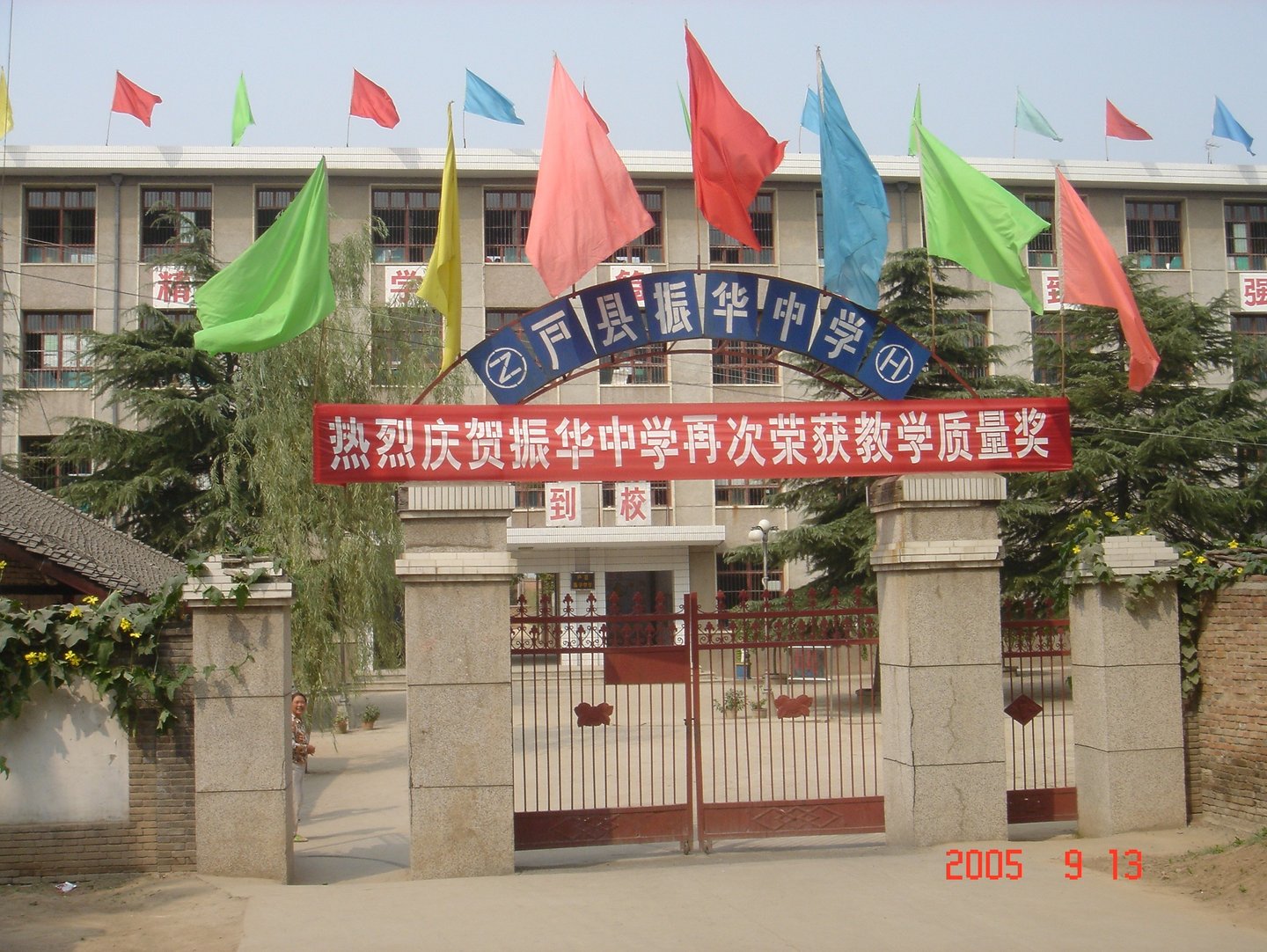
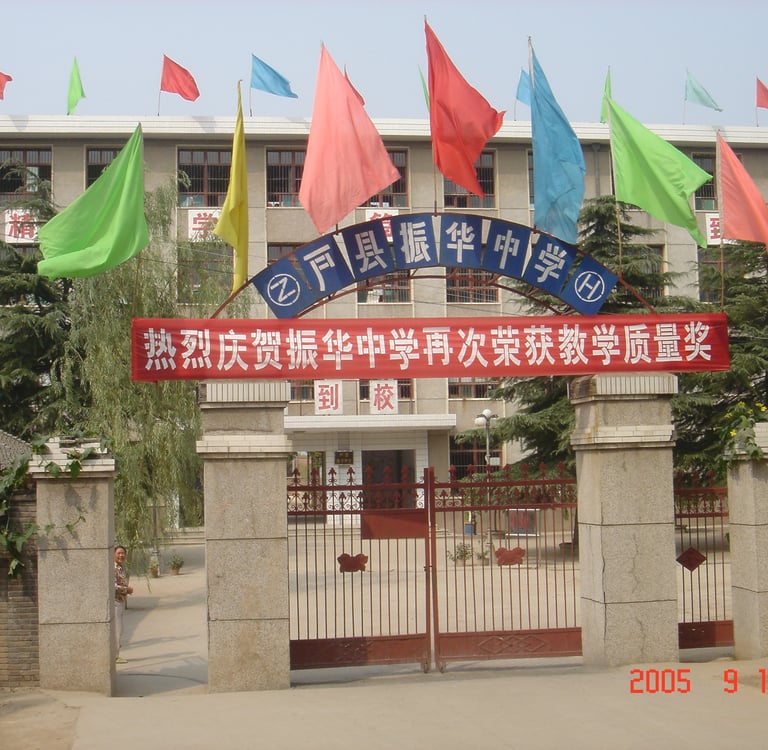
Educational Philanthropy in the Homeland
A General Who Built Schools
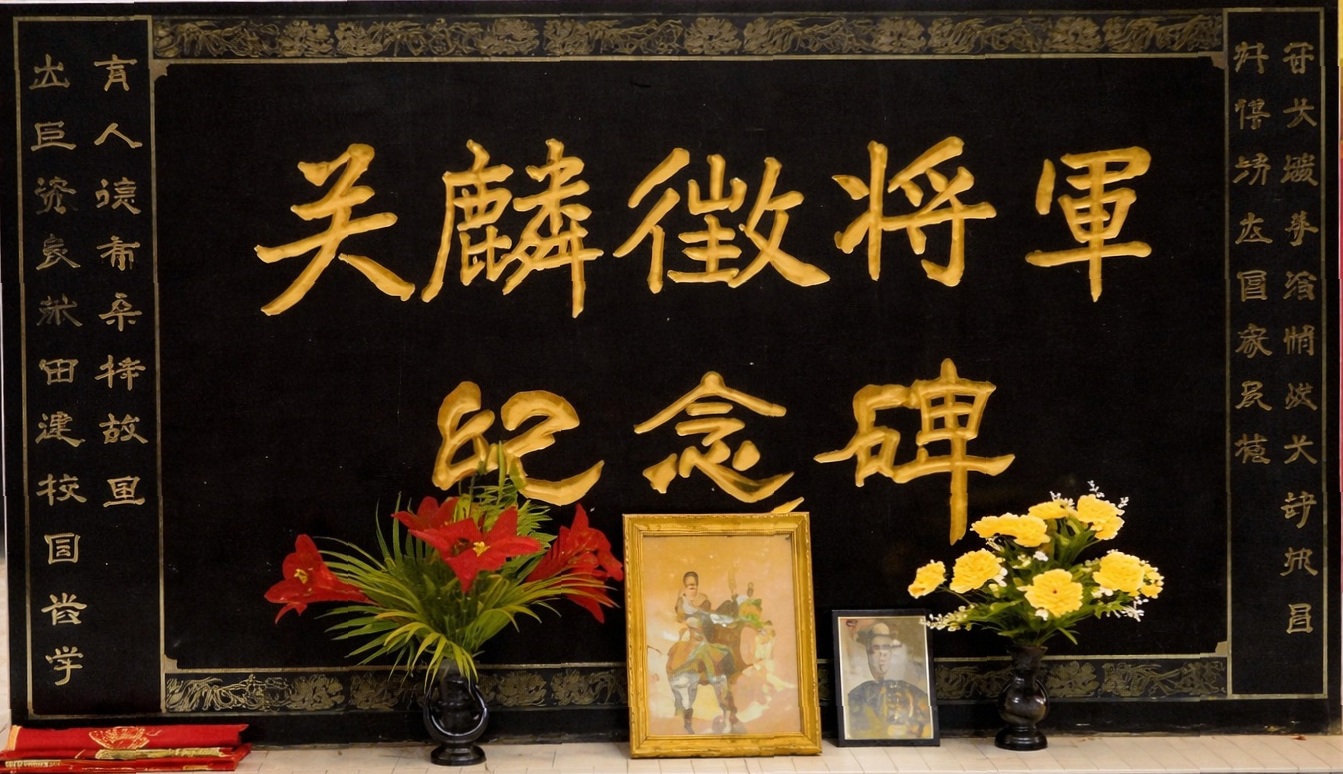
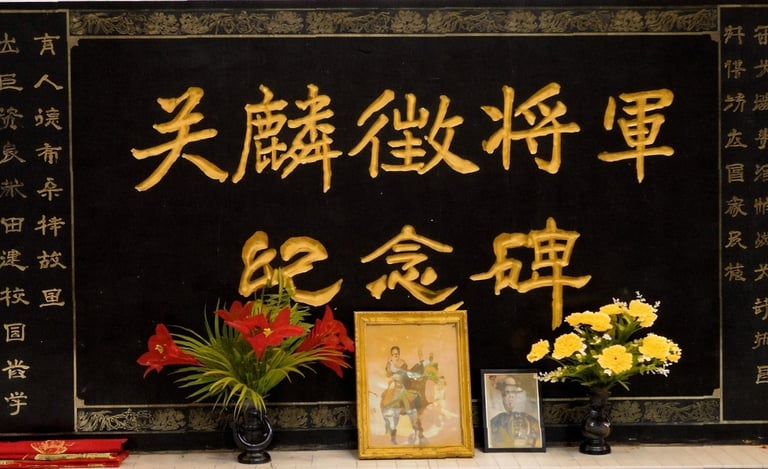
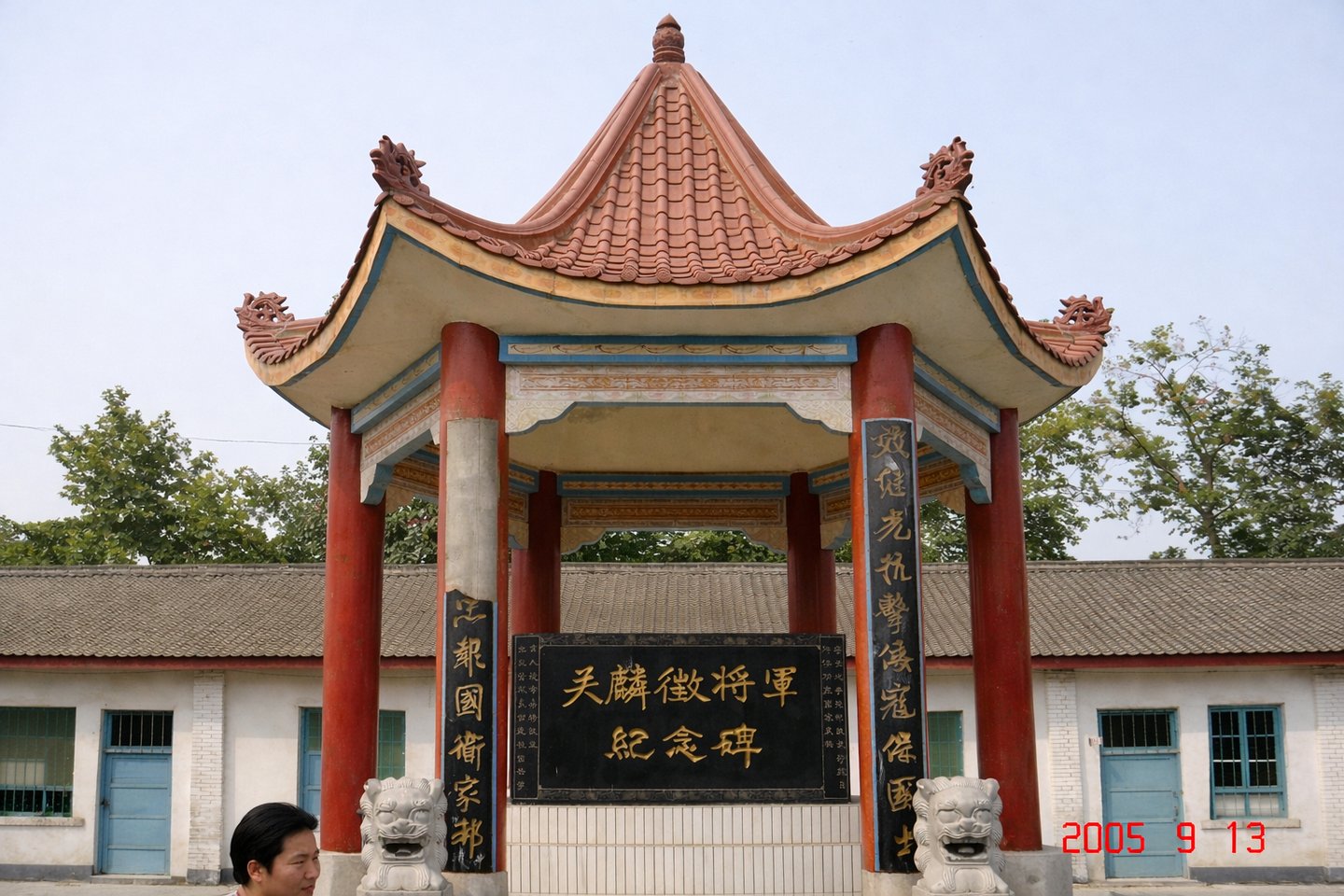
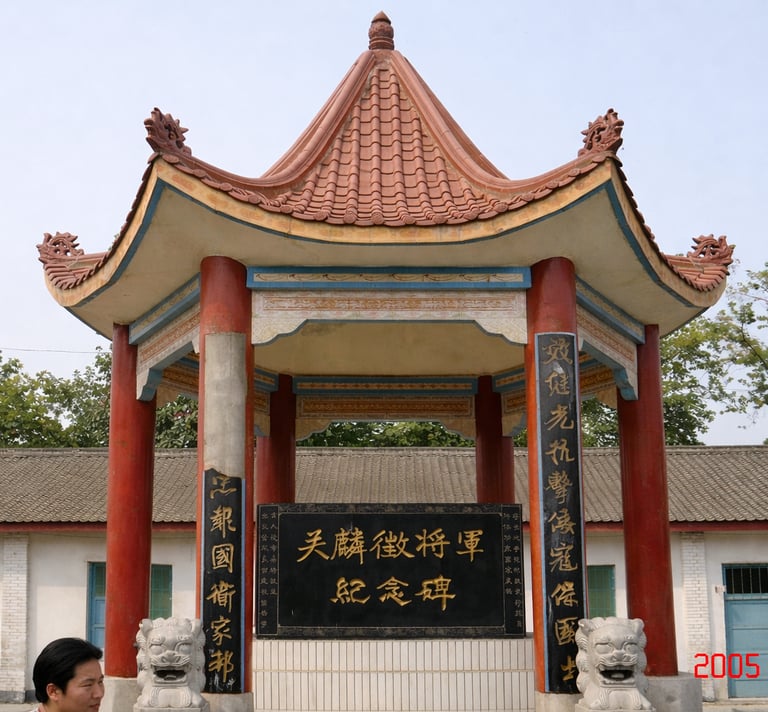
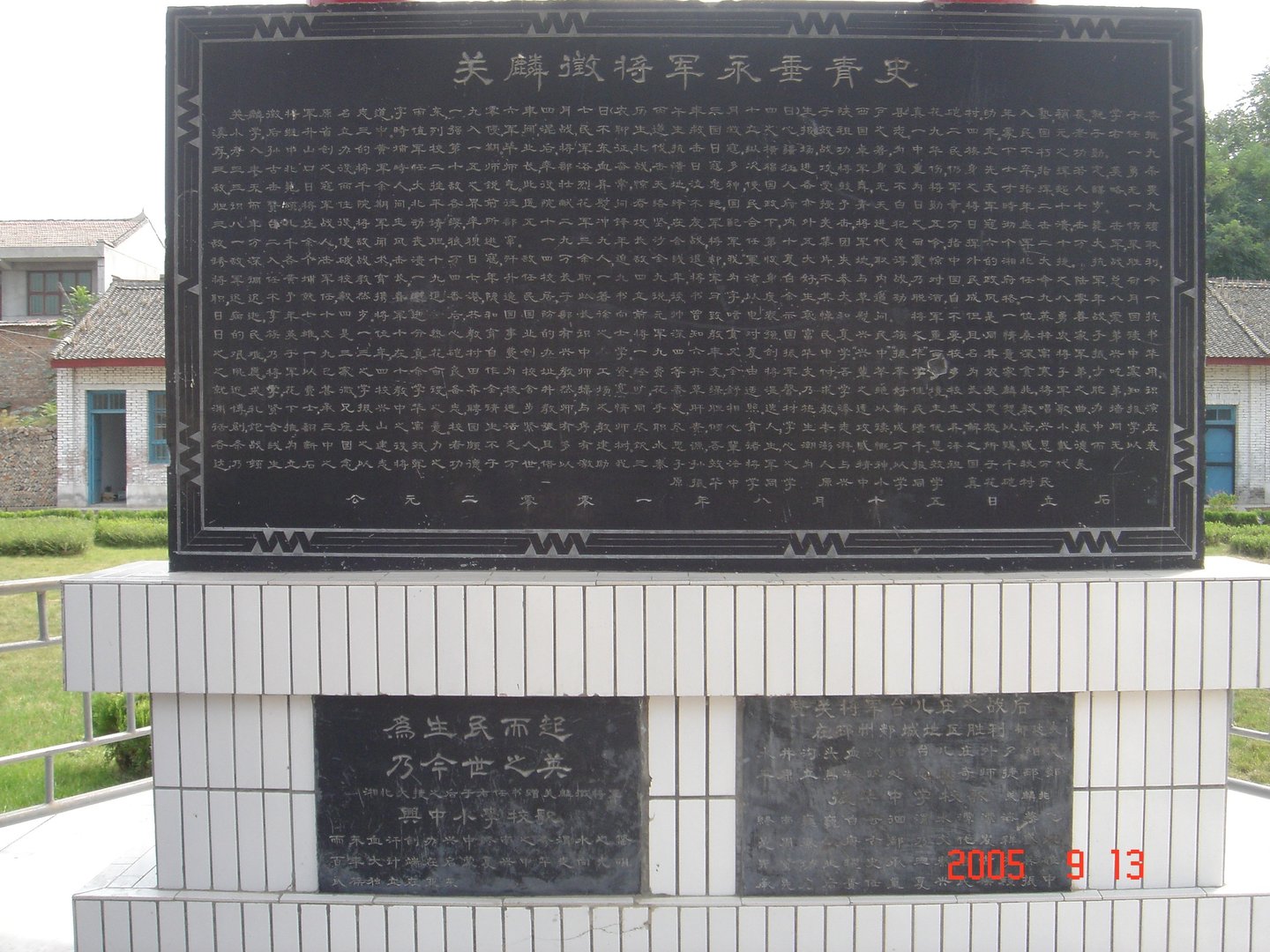
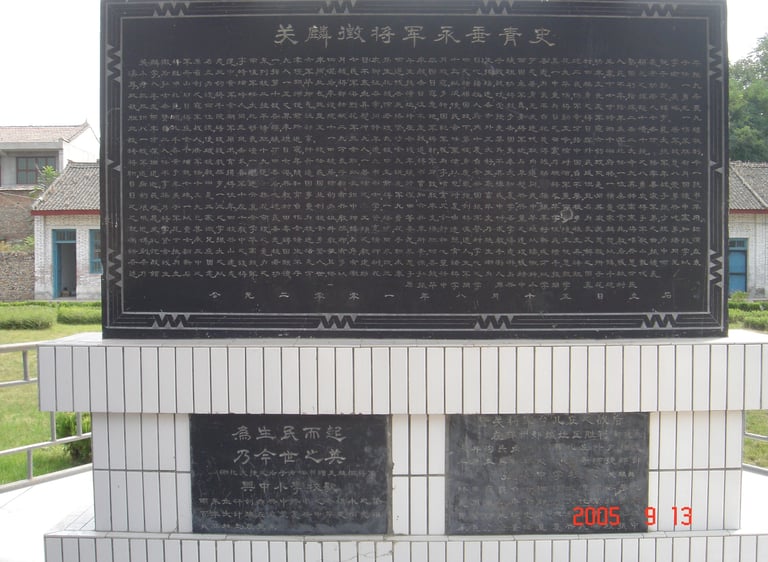
Excerpted from the stone monument erected by alumni and villagers, August 15, 2001
The General was not only a national hero — he was also a man of deep conviction and sincere dedication to education. Fully aware of the importance of education in strengthening the nation, enriching the people, and revitalizing the Chinese race, and moved by compassion for the hardship faced by farming families in his home village who wished to send their children to school, he founded Xingzhong Elementary School in Zhenhuawei Village in 1933, entirely at his own expense.
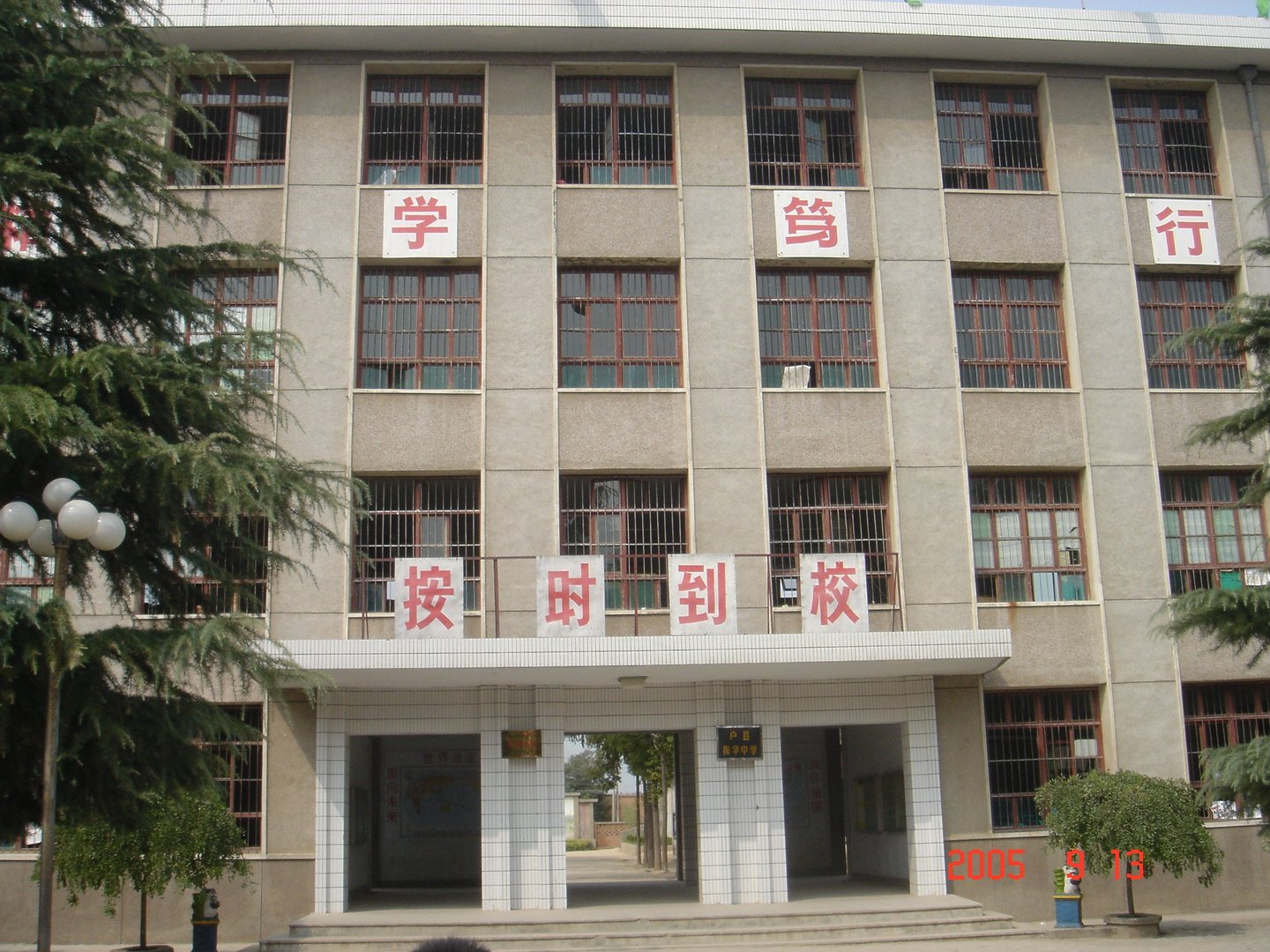
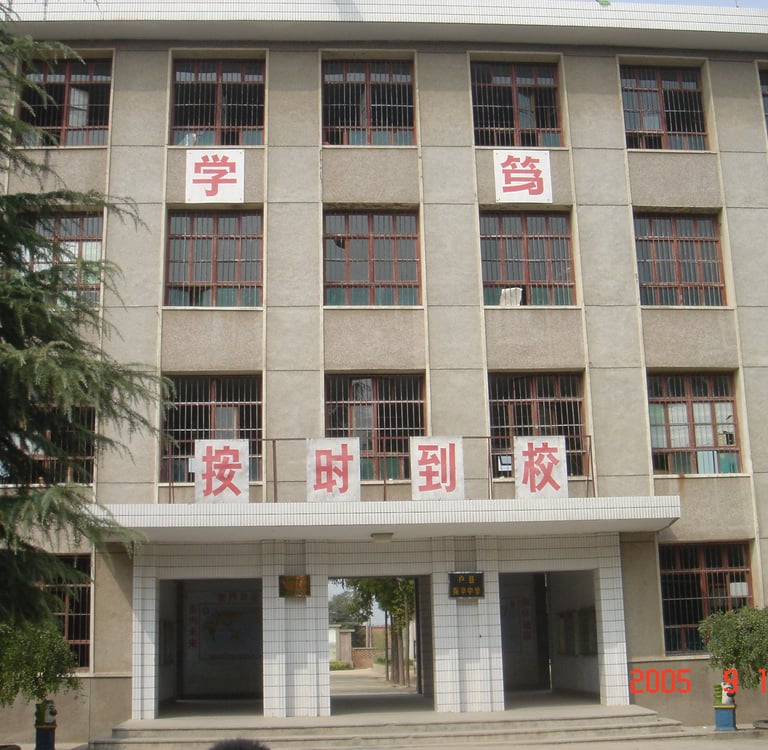
In 1946, he went on to establish Zhenhua Secondary School. The names of both schools — Xingzhong ("Revitalize China") and Zhenhua ("Invigorate the Chinese Nation") — carried within them the General's lifelong aspiration: to see China rise.
The General gave more than forty mu (6.6 acres) of his own family's prime farmland as the school grounds. Teachers' salaries and all other operating expenses were paid entirely out of his own pocket. We students, most of us sons and daughters of poor farming families, studied close to home at very little cost to our families. Yet the schools were fully equipped — the buildings orderly, the sports grounds spacious, the grounds fragrant with flowers and green with grass, warm and welcoming: a truly ideal place to learn.
The principal was Guan Linzhao, the General's younger brother — a man of wide learning who treated teachers and students alike with humility and respect. Carrying forward his brother's ambition to revitalize China, he recruited progressive educators, treating them as equals and trusted companions.
The curriculum was taught with care and purpose, imbued throughout with the ideas of New Democracy. Students sang songs, produced wall newspapers, and performed plays — all rich with the spirit of overturning oppression and building a new society. Life on campus was purposeful and well-ordered: teachers gave themselves wholeheartedly to their students, and students threw themselves wholeheartedly into their studies. The results were outstanding.
After Liberation, a great many alumni of Xingzhong Elementary School and Zhenhua Secondary School went on to serve the construction of New China across many fields, and a good number made lasting contributions.
When we drink from a well, we think of those who dug it. Our hearts are full — full of gratitude we find no adequate words to express. And so we resolved to raise this stone, to record the General's virtue and achievement for all generations to come; and to inspire the sons and daughters of Shaanxi to take the General's character and spirit as their example, and to dedicate themselves in turn to the service of their country, now and for a thousand years to come.
Erected by
alumni of the former Zhenhua Secondary School,
alumni of the former Xingzhong Elementary School, and
the villagers of Zhenhuawei Village
August 15, 2001
General Guan Linzheng and the Founding of Xingzhong Elementary School
By Li Jianting
In 1932, at the invitation of a friend, I accepted a teaching post at Cangxi Elementary School (today known as the Wenyi Village School). That October, our fellow villager Guan Linzheng — courtesy name Yudong, then serving as Brigade Commander of the 11th Brigade, 4th Division — returned home from Wufu in Zhejiang Province. The board of Cangxi School organized a reunion celebration for its faculty, alumni, and students, and I was in attendance.
It was a grand occasion. Thousands turned out, and all manner of performances filled the program. Yudong himself, along with Zhongwei and eight others, took the stage in turn to sing from the classic Qinqiang opera repertoire. The joy of that evening was unlike anything any of us had experienced before.
School Anthem of Zhenhua Secondary School
Words by Guan Linzhao, Principal
终南巍巍白云徊 渭水潆潆海燕飞
是周秦汉唐古都 乃文化发祥盛地
先贤功业耀史承 三秦自古多英雄
承先启后责任重 复兴民族赖振中
The school anthem was written by Principal Guan Linzhao, the General's younger brother. Its verses evoke the grandeur of the Zhongnan Mountains and the Wei River, honor Shaanxi as the ancient cradle of Chinese civilization — home to the Zhou, Qin, Han, and Tang dynasties — and call on each generation of students to carry forward the legacy of their forebears and dedicate themselves to the revival of the Chinese nation. The school's name, Zhenhua — "Invigorate the Chinese Nation" — rings through the anthem's final line.
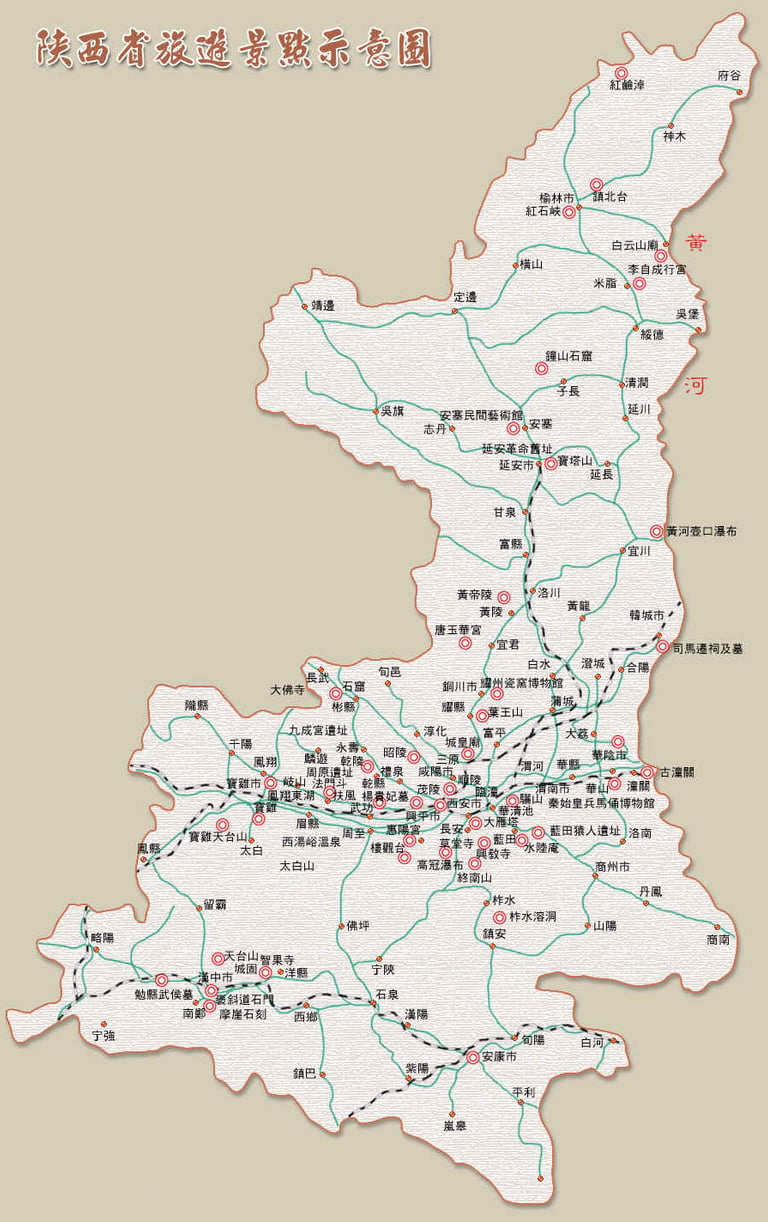
Huxian is a county in Shaanxi Province, situated at the geographic heart of China, and administered by the city of Xi'an. Sheltered to the south by the Qinling Mountains and fronted to the north by the Wei River, it enjoys a mild climate, boundless fertile plains, and abundant natural produce. The county covers a total area of 1,255 square kilometers and is home to a population of 564,700.
The term Tianfu — "Land of Abundance" — is today associated primarily with Sichuan, but its earliest use was as a tribute to the Guanzhong region of Shaanxi. Huxian has been one of the most prosperous counties along the eight-hundred-li stretch of the Wei River plain since ancient times, earning it the enduring nickname: Silver Huxian.


As the gathering drew to a close, Yudong invited me to walk home with him. Along the road he said to me:
"Cangxi blazes with light, and talent flows from it without cease. But the lamp in your village has gone dark — why not relight it? To build schools and educate the people: that is the duty of men like us."
He then asked me to take on the task of establishing a school. I declined again and again, but he would not hear of it.
The following year, I reached out to Wan Shiru, Gao Ruming, Guan Wenhua, Guan Wenxue, and board members Cao Deyan and Guan Wanyin, and together we made our plans. In the first month of that year, we enrolled more than 130 school-age children and held our opening ceremony. Xingzhong Elementary School was officially founded.
A board meeting was convened immediately and construction began: nine rooms were built in the modern style, twelve rooms in the traditional two-story fashion, and seven rooms in the existing local temple were incorporated into the campus — twenty-eight rooms in all. Thirteen mu (2.15 acres) of land were purchased to complete the grounds. General Guan personally contributed more than 5,000 yuan to make it possible.
I remained for two years, until a difference of opinion with the General's father led me to part ways and move on. In 1946, the school was expanded: a secondary school program was added, and the combined institution was renamed Zhenhua Secondary School, with the General's brother, Guan Linzhao, appointed as principal. After Liberation it was renamed Huxian Normal School, with Yang Rui'an as principal. It is known today as Huxian No. 3 Secondary School.
© Guanlin Zheng Memorial – Family Managed
Contact
This website is the official platform managed by the family.
For all inquiries, please contact:
generalguanlinzheng@gmail.com